








THE BUYER'S GUIDE / SELECTION
Choosing a Portable High Pressure Water Pump: Working Requirements and Integration Fit
A buyer-focused guide to choosing a portable high pressure water pump from Hebei FeiFanWei Technology Co.,Ltd. It compares three documented configurations: the FFW 14/500 wheeled unit, the TBQ10/3 compact two-stroke pump and the four-stroke diaphragm High Pressure Fire Water Pump. The comparison covers flow, lift, pressure, weight, engine type, connections and deployment mode, and notes where each option fits and where it does not.

Required flow: 500 L/min (FFW 14/500), 300 L/min (TBQ10/3), ≥ 150 L/min (diaphragm High Pressure Fire Water Pump)
Maximum lift and pressure for elevation and long-distance delivery: 180 m / ≥ 1.8 MPa (FFW 14/500), 215 m (TBQ10/3), ≥ 470 m / ≥ 15 MPa (diaphragm unit)
Mobility and deployment: wheeled folding-handle frame and vehicle mounting (FFW 14/500); compact carry and slip-on use (TBQ10/3); compact structure, ≤ 80 kg (diaphragm unit)
System integration: standalone, tandem and parallel pumping as documented in the applications for FFW 14/500 and TBQ10/3
Hose connection fit: DN50 inlet / DN40 outlet (FFW 14/500); 40 mm inlet and outlet (diaphragm unit)
Engine and starting method: four-stroke with hand or electric start (FFW 14/500); two-stroke with hand line or electric start (TBQ10/3); single-cylinder four-stroke ≥ 23HP (diaphragm unit)
Field serviceability: quick-release detachable pump end, mechanical rotary seal and sealed bearing (TBQ10/3); low oil level protection (FFW 14/500)
Choosing a Portable High Pressure Water Pump: Working Requirements and Integration Fit
Choosing a portable high pressure water pump starts with your working requirements, not with the model list. Work out how much water you need, how far and how high it has to travel, how the crew will move the unit and what hose and vehicle setup it has to fit. Once you know these, the shortlist is usually obvious.
This guide covers three pump configurations documented by Hebei FeiFanWei Technology Co.,Ltd. Every figure below comes from the published product specifications. Prices, lead times and certifications are not covered here. Confirm them directly with the supplier for your target market.
Step 1: Define the job before the pump
Answer these questions before you compare models:
- Flow vs. pressure: Do you need volume for an attack line, or high pressure to move water over a long distance or up a steep slope?
- Elevation and distance: How much vertical lift and hose length does the route involve, for example in mountainous terrain or on a long remote watering line?
- Mobility: Will the pump be carried by hand, rolled on wheels or mounted on a vehicle?
- System integration: Will it run alone, in tandem (in series) over long distances, or in parallel with other pumps for more volume on slip-on units?
- Connections: What inlet and outlet diameters do your current hoses and fittings use?
- Starting and field service: Which starting method suits the crew, and how much pump-end maintenance can be done in the field?
Step 2: Compare the options
| Criterion | FFW 14/500 (wheeled frame) | TBQ10/3 (compact, two-stroke) | High Pressure Fire Water Pump (diaphragm) |
|---|---|---|---|
| Engine | Four-stroke, forced air cooling, gasoline; ≥ 14HP@3600rpm | Two-stroke, forced air cooling; 10HP | Single cylinder, four-stroke; ≥ 23HP; ≥ 620cc |
| Pump type | Single-stage centrifugal, brass impeller | 3-stage pump end, brass impeller | Four cylinder diaphragm pump |
| Flow | 500 L/min (listed as ≥ 500 L/min) | 300 L/min | ≥ 150 L/min (maximum) |
| Maximum lift | 180 m (≥ 180 m) | 215 m | ≥ 470 m |
| Maximum pressure | ≥ 1.8 MPa | ≥ 15 MPa | |
| Spray range | 30 m (≥ 30 m) | 37 m | ≥ 29 m |
| Suction lift | 7 m (≥ 7 m) | 7 m | ≥ 7 m |
| Inlet / outlet | 50 mm (DN50) / 40 mm (DN40) | 40 mm (1.5") / 40 mm (1.5") | |
| Net weight | 75 kg | 11.5 kg (as listed) | ≤ 80 kg |
| Starting | Hand (recoil) or electric | Hand line or electric | |
| Mobility | Wheels, hand carry handle, folding-handle frame; can be vehicle-mounted | Compact and easy to carry; popular for slip-on applications | Compact structure |
Where a published specification uses "≥" or "≤", the table keeps that wording. The FFW 14/500 appears on two product pages: one lists nominal values and the other lists minimum values. The table shows both.
Step 3: Match the pump to the requirement
When you need volume and quick repositioning: FFW 14/500
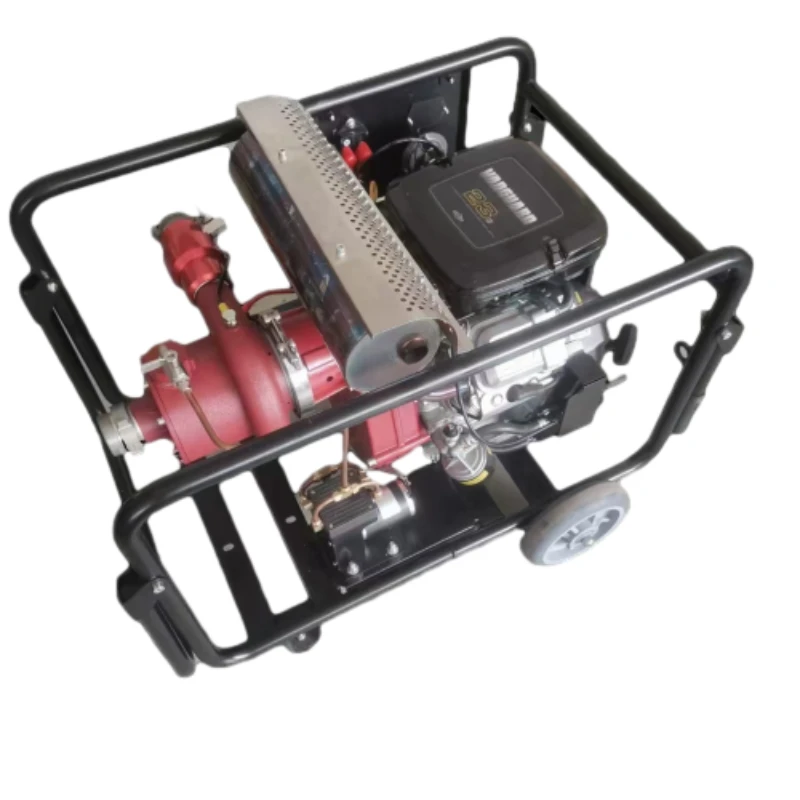
The FFW 14/500 has the highest listed flow of the three, at 500 L/min. The supplier says it can feed a 1.5-inch (40) hose or, through a water separator, split into two 1.5" discharge lines and run two water columns at once. The kit includes the engine, pump, spray nozzles, inlet pipe, high-pressure fire hose and accessories, plus a suction pipe with a float bottom valve. The engine has a low oil level protection system that stops it from starting without oil.
It comes on a wheeled, folding-handle frame and can be vehicle-mounted. It suits crews that need volume and fast moves on accessible ground. Where it does not fit: at 75 kg, it is not a backpack-carry pump. If your job needs more than 180 m of lift, look at the other two options.
When portability and multi-pump setups matter: TBQ10/3
The TBQ10/3 pairs a 3-stage pump end with a two-stroke engine. Its pump head is made of lightweight, corrosion-resistant aluminum alloy, and it has anodized parts. It can be used alone, in tandem or in parallel with other pumps, and is a popular choice for slip-on units. Its features support field serviceability:
- A quick-release clamp and detachable pump end, so the pump end can be replaced in the field
- A blister-resistant mechanical rotary seal
- A sealed bearing, so the pump end needs no greasing in the field
- A belt-drive system
- A 15 L fuel tank
It lists 215 m maximum lift and 37 m range at 300 L/min. Where it does not fit: it delivers less flow than the FFW 14/500. Its maximum pressure and hose connection sizes are not published, so confirm both before you plan your hose layout. Also confirm the listed 11.5 kg net weight for the exact configuration you order.
When elevation and pressure dominate: High Pressure Fire Water Pump
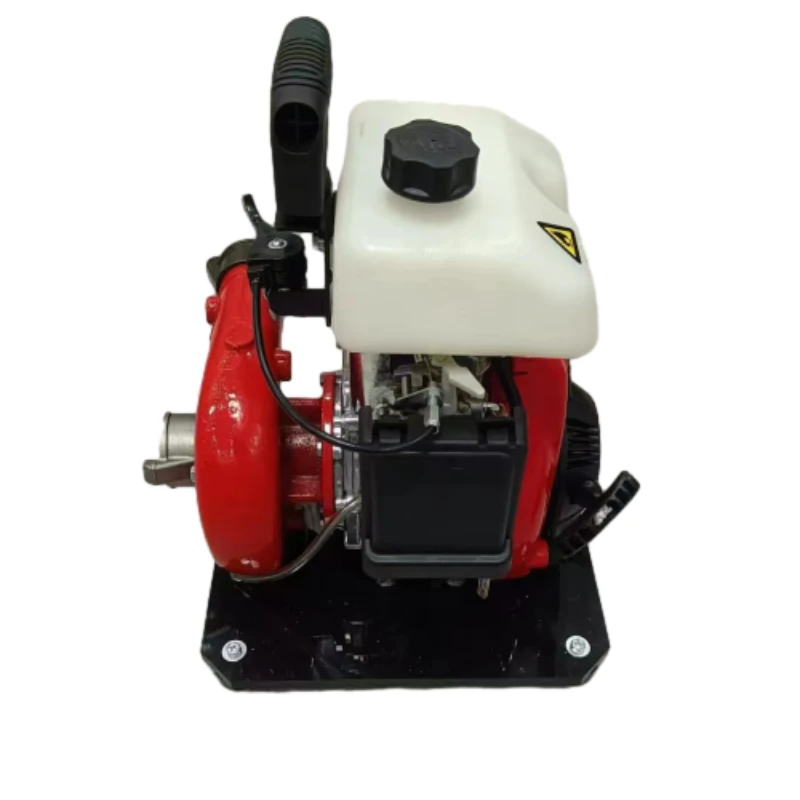
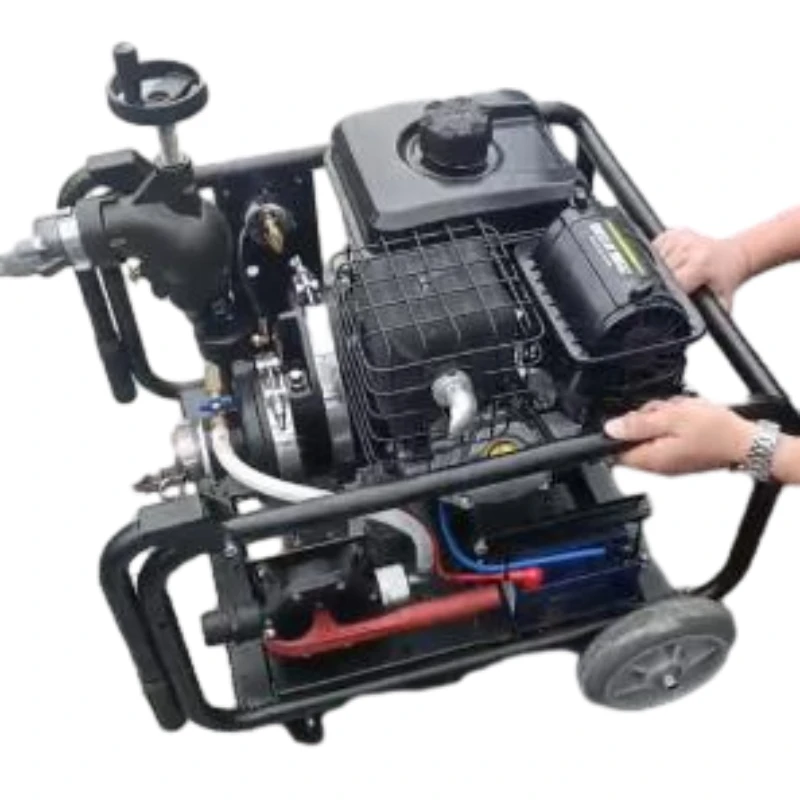
This unit pairs a single-cylinder four-stroke engine (≥ 23HP, ≥ 620cc) with a four cylinder diaphragm pump. It has ≥ 15 MPa maximum pressure and ≥ 470 m lift head, the highest of the three options. Inlet and outlet are both 40 mm (1.5"). Where it does not fit: maximum flow is ≥ 150 L/min, the lowest listed here, so it is not a high-volume choice. Weight is ≤ 80 kg.
Step 4: Check integration fit
- Hoses and fittings: Make sure the inlet and outlet sizes match the hoses you already have. The FFW 14/500 uses a DN50 inlet and a DN40 outlet. The diaphragm unit uses 40 mm on both sides.
- Pump layout: For long relays, the published applications for the FFW 14/500 and TBQ10/3 both include tandem pumping over long distances and parallel pumping for higher-volume slip-on units.
- Suction conditions: All three list a suction lift of 7 m (or ≥ 7 m). Plan where the pump will sit relative to the water source with this in mind.
- Vehicles: The FFW 14/500 supports vehicle mounting. The TBQ10/3 supports slip-on use.
What this guide does not cover
This guide does not cover pricing, delivery times, certifications or compliance for any specific country or region. Buyers in the United States, the Middle East, Europe and Southeast Asia should confirm local requirements and documentation with Hebei FeiFanWei Technology Co.,Ltd. before ordering. Treat the listed figures as published specifications, not as field test results for your site conditions.
THE PEOPLE

About the author
THE COMPANY
Hebei FeiFanWei Technology Co.,Ltd.
Hebei FeiFanWei Technology Co.,Ltd. is a comprehensive enterprise specialized in the research, production, sales and training of emergency rescue equipment. It mainly produces forest, grassland and wildland protection equipment, such as water fire-extinguishing equipment series, Portable fire pumps,Truck-mounted fire pump, Personal protection equipment, etc. It is the first water-extinguishing and fire-fighting equipment manufacturing base in north China.…
About Us ↗Visit company website ↗YOUR NEXT STEP
Bring your brief. Start a useful conversation.
Use case, specification, quantity and delivery window: make the next conversation specific.



 English
 Arabic
 Bengali
 China
 French
 German
 Hausa
 Indonesian
 Italian
 Japanese
 Javanese
 Malay
 Persian
 Portuguese
 Punjabi
 Russian
 Spanish
 Swahili
 Telugu
 Vietnamese