








THE BUYER'S GUIDE / SELECTION
Choosing a High Pressure Fire Water Pump: Working Requirements and Integration Fit
Selecting the right high pressure fire water pump depends on matching the pump's output characteristics—head lift, flow rate, operating pressure, and portability—to the actual deployment scenario. This guide walks procurement teams, fire departments, and field buyers through the key selection criteria using confirmed product specifications from Hebei FeiFanWei Technology Co.,Ltd., covering single-operator backpack units, wheeled mobile frames, lightweight portable models, and full-system high-head configurations.

Required head lift and pressure class: match the pump's rated lift head and maximum pressure to the vertical elevation and suppression distance of the deployment site—ranging from ≥ 180 m high-flow centrifugal configurations to ≥ 470 m or ≥ 500 m ultra-high-head models.
Portability and deployment mode: choose between backpack carry (≤ 10.6 kg), single-operator carry (11.5 kg), wheeled ground transport with optional vehicle mounting (≤ 60–80 kg), or a full-system wheeled package based on terrain access and crew size.
Engine type and starting method: evaluate two-stroke vs. four-stroke engines, forced air cooling, displacement and horsepower against field fuel availability and maintenance capability; confirm whether dual-mode starting (hand-line and electric) is required.
Pump type and flow architecture: four-cylinder diaphragm for high-pressure steady flow; single-stage centrifugal with brass impeller for maximum volume; 3-stage multi-stage pump end for lightweight high-lift carry; water mist configuration for Class A/B/C suppression efficiency.
Inlet/outlet diameter and hose compatibility: verify that inlet and outlet diameters (25 mm, 32 mm, 40 mm, or 50 mm) match existing hose inventory and confirm dual-discharge separator options if two-line attack is required.
Special operational requirements: assess whether night lighting, low-oil engine protection, automatic spray-mode switching, check valves, or tandem/parallel pumping capability are needed for the intended deployment.
What Makes a Fire Water Pump the Right Fit?
A high pressure fire water pump is only as effective as its match to the working conditions it faces. Head lift requirements in mountainous terrain differ sharply from flat grassland attack lines. Night operations demand different feature sets than daytime wildland suppression. Before specifying any pump, procurement teams need a clear picture of water source distance, terrain elevation, nozzle reach requirements, crew size, and whether the unit must integrate with vehicles or operate as a standalone.
Hebei FeiFanWei Technology Co.,Ltd. manufactures a range of fire water pumps designed for forest, grassland, and wildland firefighting. The selection criteria and product comparisons below are based exclusively on confirmed published specifications.
Key Selection Criteria
1. Required Head Lift and Pressure Class
Head lift—the maximum vertical height the pump can deliver water—is the most important specification for terrain-driven deployments.
- Ultra-high head (≥ 470 m), maximum pressure: The four-cylinder diaphragm pump configuration delivers a lift head of ≥ 470 m and a maximum pressure of ≥ 15 MPa, making it the appropriate choice when water must reach steep hillsides or distant high-elevation suppression points. Maximum flow is ≥ 150 L/min and spray range reaches ≥ 29 m.
- High head, precision flow (≥ 500 m): The Ultra-Remote unit with integrated lighting achieves a lift of ≥ 500 m with a ≥ 13 HP engine, but at a maximum flow of ≥ 45 L/min—suited to precision discharge at extended vertical distances where volume demand is lower.
- High head, high volume (≥ 180 m, ≥ 500 L/min): Two FFW14/500 configurations reach 180 m lift at up to 500 L/min maximum flow. A single outlet can be split via a water separator into two 1.5-inch discharge hoses, providing the suppression footprint of two lines from one machine.
- Moderate head, ultralight carry: The TBQ10/3 achieves a 215 m maximum lift at 11.5 kg complete machine weight. For single-operator deployment in terrain where vehicle access is not possible, this weight class is decisive.
- Water mist suppression: The backpack-mounted GXN-08/04-1-WNS operates at up to 8.2 MPa maximum pressure with a 10.6 kg total machine weight. Its rated flow of 4.0 L/min and rated working pressure of 5.3 MPa target efficient suppression of Class A, B, and C fires at individual or cooperative crew scale.
2. Portability and Deployment Mode
How a pump is moved to the fire line is often as critical as its output rating.
| Deployment Mode | Product | Weight | Key Mobility Feature |
|---|---|---|---|
| Backpack carry | Water Mist Backpack Pump (GXN-08/04-1-WNS) | 10.6 kg | Shoulder straps; three integrated 20 L water bags |
| Single-operator carry | High Pressure Portable Pump (TBQ10/3) | 11.5 kg | Compact frame; hand-line or electric start |
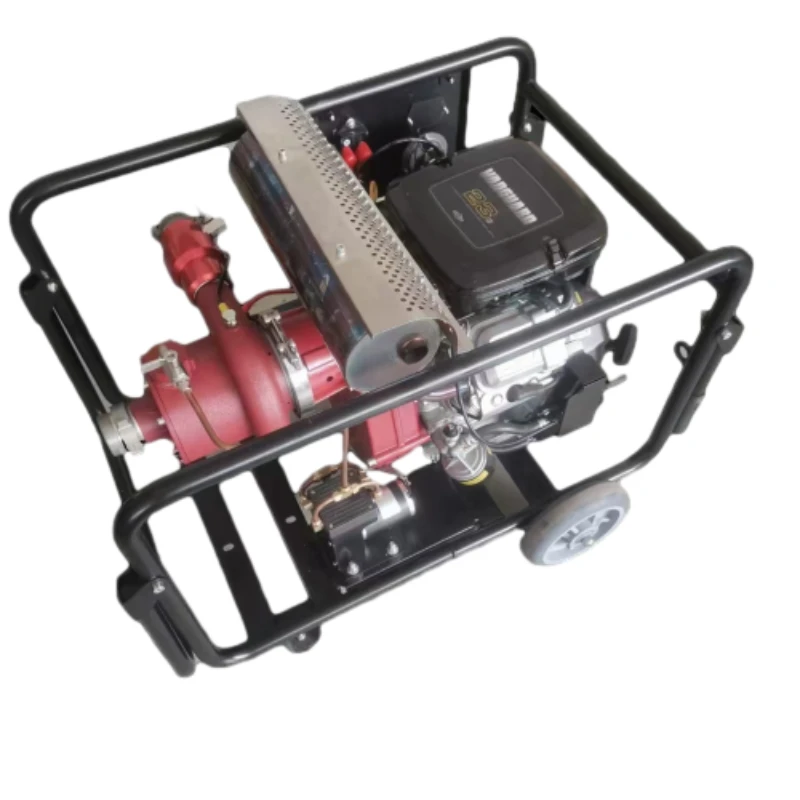
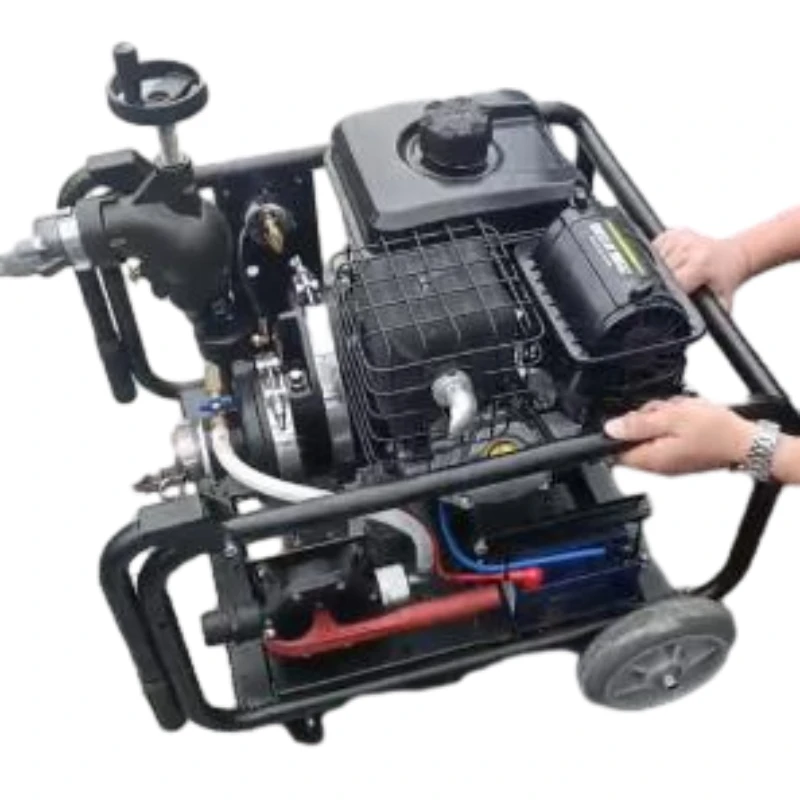
| Wheeled ground / vehicle mount | Movable Fire Water Pump (FFW14/500) | 75 kg | Folding-handle outer frame; wheels; vehicle-mount capable |
| Wheeled ground / vehicle mount | Portable High Pressure Water Pump (FFW 14/500) | 75 kg | Folding-handle outer frame; wheels; vehicle-mount capable |
| Wheeled with night lighting | Ultra-Remote Pump With Lighting | ≤ 60 kg | Adjustable lifting night-lighting lamp; wheel-and-handle frame |
| Full system (engine + pump + accessories) | High Pressure fire water Pump | ≤ 80 kg | Complete equipment set; 40 mm inlet and outlet |
3. Engine Type and Starting Method
Engine choice affects maintenance burden, field fuel availability, and cold-start reliability.
- The High Pressure fire water Pump uses a single-cylinder, four-stroke engine (≥ 23 HP, ≥ 620 cc displacement), delivering stable performance and low noise output while powering a four-cylinder diaphragm pump.
- The Ultra-Remote unit with lighting uses a single-cylinder, four-stroke, forced air-cooled engine (≥ 13 HP) with a ≥ 7 L fuel tank.
- The FFW14/500 models share a four-stroke forced air-cooled 14 HP engine with both recoil (hand-line) and electric starting—a dual-mode advantage in cold or wet conditions.
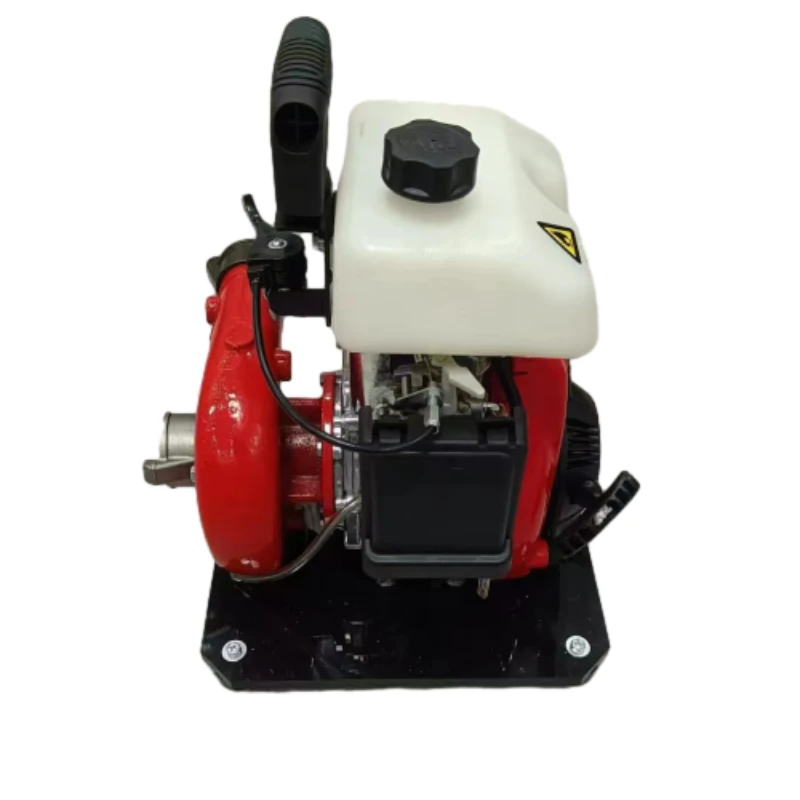
- The TBQ10/3 Portable Pump uses a lighter 2-stroke, forced air-cooled 10 HP engine; its belt-drive system supports low-maintenance performance and its quick-release clamp allows detachable pump-end replacement in the field.
- The Backpack model uses a Honda gasoline engine (1.8 HP) paired with an Italian-origin high-pressure pump, a pressure-regulating valve, and a speed reducer.
4. Pump Type and Flow Architecture
- Four-cylinder diaphragm pump (High Pressure fire water Pump): Produces very high pressure (≥ 15 MPa) at a steady flow—suited to fixed-pattern suppression over extreme vertical distances.
- Single-stage centrifugal pump, brass impeller (Movable FFW14/500): Delivers the highest maximum flow (≥ 500 L/min) at moderate-to-high pressure (≥ 1.8 MPa); the brass impeller resists corrosion from open water sources.
- 3-stage pump end (TBQ10/3): Ultra-light anodized aluminum alloy construction with a blister-resistant mechanical rotary seal and greasing-free sealed bearings for extended field service life.
- High-pressure water mist (GXN-08/04-1-WNS): A copper high-pressure nozzle with automatic spray-mode switching combines suppression and cooling in a compact backpack payload.
5. Inlet / Outlet Configuration and Hose Compatibility
Inlet and outlet diameters determine compatibility with existing hose inventories.
- 40 mm (1.5") inlet and outlet: High Pressure fire water Pump (diaphragm, high-head model)
- 25 mm, 32 mm, or 40 mm inlet; 40 mm outlet: Ultra-Remote unit with lighting (multiple inlet options)
- 50 mm (DN50) inlet; 40 mm (DN40) outlet: Movable FFW14/500
- Dual-discharge via water separator (2 × 1.5"): Movable and Portable FFW14/500 models
Buyers with existing hose inventories should verify diameter compatibility before finalizing a specification.
6. Night Operations and Special-Use Features
- The Ultra-Remote unit with lighting incorporates an adjustable lifting night-lighting lamp, directly addressing visibility on the fire line after dark. Its outlet also includes a check valve and high-pressure water escape valve.
- The Movable FFW14/500 has an engine-level low oil protection system to prevent start-without-oil damage.
- The Backpack model provides a combined spray gun that automatically switches between direct-flow and atomization modes, extending suppression capability across fire classes A, B, and C.
Application Matching Summary
| Scenario | Recommended Configuration |
|---|---|
| Extreme head lift (steep hillside), very high pressure | High Pressure fire water Pump (diaphragm, ≥ 470 m, ≥ 15 MPa) |
| Ultra-remote vertical reach, moderate flow, night operations | Ultra-Remote Pump With Lighting (≥ 500 m lift, integrated lamp) |
| High-volume attack line, vehicle-accessible terrain, dual-line | Movable / Portable FFW14/500 (500 L/min, 180 m lift) |
| Single-operator carry into remote terrain | TBQ10/3 Portable Pump (11.5 kg, 215 m lift) |
| Individual firefighter, Class A/B/C, water-efficient suppression | Backpack Water Mist Pump (10.6 kg, 8.2 MPa max) |
Integration Considerations
Tandem and parallel pumping: The TBQ10/3 and FFW 14/500 are both documented for tandem pumping over long distances and parallel pumping for higher-volume slip-on configurations. Buyers deploying multiple units along extended hose lays should confirm hose diameter and coupling standards match across the fleet.
Vehicle mounting: Both the Movable and Portable FFW14/500 configurations are confirmed as vehicle-mount capable in addition to wheeled ground mobility. The Ultra-Remote unit with lighting is similarly wheeled for rapid repositioning.
Crew size and tempo: Wheeled systems (≤ 60–80 kg) typically require a two-person handling team for setup and relocation. The 11.5 kg TBQ10/3 and the 10.6 kg backpack model are designed for individual deployment.
Water source compatibility: All listed models specify suction lifts of ≥ 5 m to ≥ 7 m. Buyers sourcing water from streams, ponds, or natural features should verify the vertical distance from the water surface to the pump inlet against the rated suction lift before deployment.
What This Guide Does Not Cover
This selection guide is based on confirmed published product specifications from Hebei FeiFanWei Technology Co.,Ltd. Pricing, delivery timelines, export certifications, and third-party test reports are not addressed because confirmed materials for those elements are not available. Buyers in regulated markets should independently verify applicable certifications before procurement.
THE PEOPLE

About the author
THE COMPANY
Hebei FeiFanWei Technology Co.,Ltd.
Hebei FeiFanWei Technology Co.,Ltd. is a comprehensive enterprise specialized in the research, production, sales and training of emergency rescue equipment. It mainly produces forest, grassland and wildland protection equipment, such as water fire-extinguishing equipment series, Portable fire pumps,Truck-mounted fire pump, Personal protection equipment, etc. It is the first water-extinguishing and fire-fighting equipment manufacturing base in north China.…
About Us ↗Visit company website ↗YOUR NEXT STEP
Bring your brief. Start a useful conversation.
Use case, specification, quantity and delivery window: make the next conversation specific.



 English
 Arabic
 Bengali
 China
 French
 German
 Hausa
 Indonesian
 Italian
 Japanese
 Javanese
 Malay
 Persian
 Portuguese
 Punjabi
 Russian
 Spanish
 Swahili
 Telugu
 Vietnamese