








THE BUYER'S GUIDE / SELECTION
Choosing a Portable High Pressure Fire Water Pump: Application Fit and Specification Checks
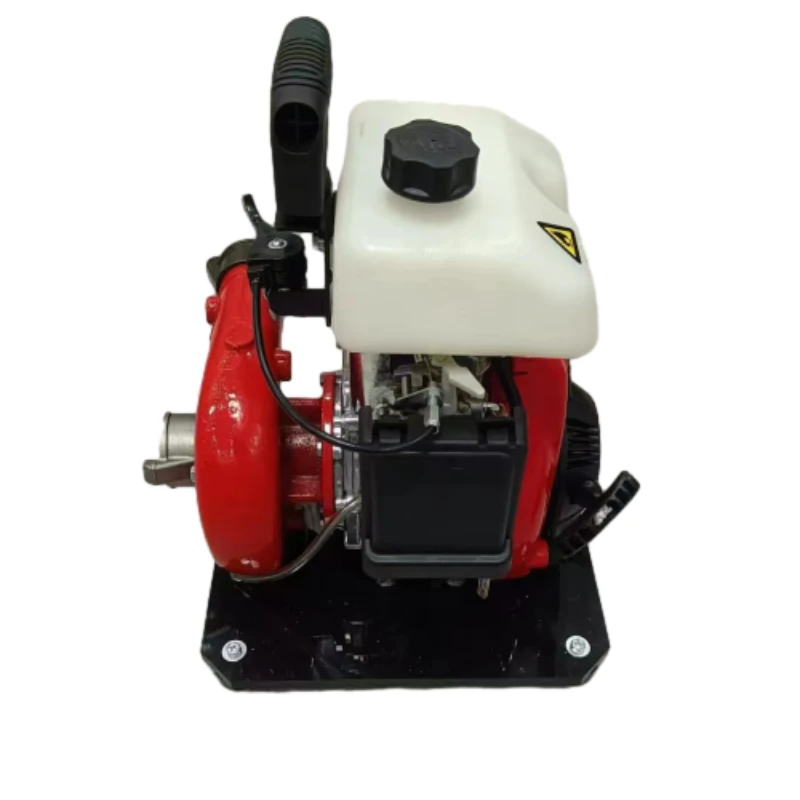
Selecting the right portable high pressure fire water pump means matching engine type, weight, pressure output, flow rate, and deployment method to the specific firefighting scenario. This guide walks procurement teams and field buyers through the key specification checkpoints—using confirmed product data from Hebei FeiFanWei Technology Co.,Ltd.—to narrow down the best-fit unit for wildland, forestry, mountainous, and high-volume attack applications. No price, lead-time, or certification claim is made without source confirmation.

Deployment method and carry configuration (backpack solo-carry ≤ ~12 kg vs. wheeled/vehicle-mounted vs. hand-carry with optional backpack) — determines whether a unit suits solo remote terrain or coordinated vehicle-based operations
Maximum pressure and lift head — defines whether the pump can deliver water to the required elevation or distance; calculated head (static head plus hose friction loss) must be within the pump's rated capacity
Flow rate — governs suppression capacity; must match nozzle and hose specifications and attack intensity requirements
Engine type and cooling system (two-stroke water-cooled, two-stroke air-cooled, four-stroke air-cooled, high-displacement four-stroke) — affects fuel logistics, maintenance schedule, and continuous-operation suitability
Pump type and impeller/seal construction (double stainless steel centrifugal, 3-stage brass centrifugal, single-stage centrifugal, four-cylinder diaphragm) — determines durability, water-quality tolerance, and in-field maintenance requirements
Tandem and parallel pumping compatibility — required for long hose lays, relay operations, or high-volume slip-on configurations
Why Specification Fit Matters Before You Buy
A portable high pressure fire water pump that performs brilliantly in one deployment scenario can be the wrong tool in another. A backpack unit ideal for solo forest patrols lacks the volume output needed for parallel attack lines. A wheeled high-volume pump that excels on a slip-on vehicle may be impractical for a single firefighter climbing a steep ridge. Understanding the gap between what a pump can do and what your operation actually needs is the first step in confident procurement.
This guide identifies the structural selection criteria—drawing exclusively from confirmed product specifications—and maps each criterion against the available pump models offered by Hebei FeiFanWei Technology Co.,Ltd.
Core Selection Criteria for a Portable High Pressure Fire Water Pump
1. Deployment Method and Carry Configuration
How the pump gets from the staging area to the water source is one of the most practical constraints in equipment selection.
- Backpack/solo carry (≤ ~12 kg): Suitable for rapid initial-attack in remote or steep terrain. The TBQ 10/2 weighs 11.8 kg and incorporates a one-key start, making it a strong candidate for single-operator backcountry use. The TBQ10/3 weighs 11.5 kg and also offers hand-line or electric starting options, supporting similar deployment profiles.
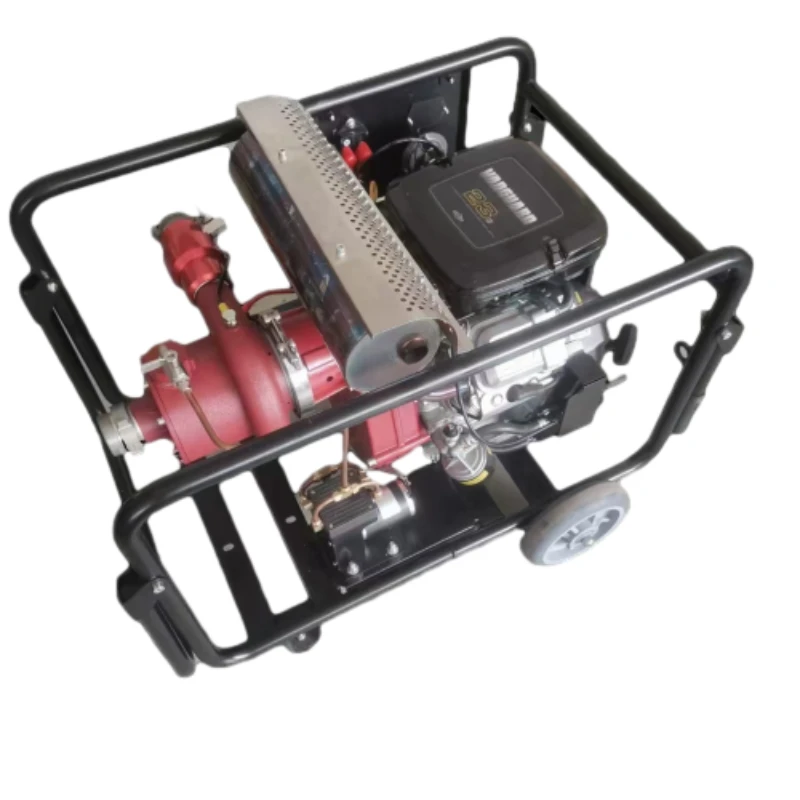
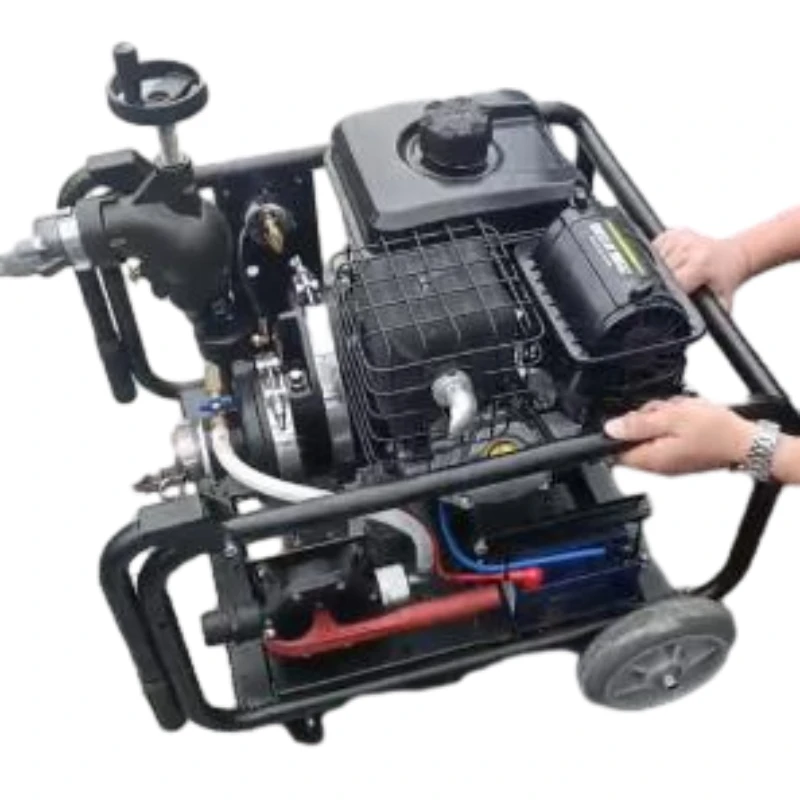
- Wheeled/vehicle-mounted transport: The FFW 14/500 (75 kg) is designed with a folding-handle outer frame and wheel set, allowing rapid repositioning while being too heavy to carry by hand for most personnel.
- Compact hand-carry with optional backpack: The FFW6/3 (11 kg) includes a carry handle and an available backpack configuration, fitting rapid-response initial-attack needs where maximum pressure is less critical.
Buyer check: Confirm the terrain grade and the number of personnel available to deploy the pump. Backpack-carry units must be under the organisation's safe manual-handling weight limit for one operator.
2. Maximum Pressure and Lift Head
Pressure and lift head determine whether water can reach targets above the pump, travel long distances through hose lines, or deliver a jet accurate enough for precision suppression.
| Model | Maximum Pressure | Maximum Lift Head |
|---|---|---|
| TBQ 10/2 | ≥ 2.3 MPa | ≥ 210 m |
| TBQ10/3 | — | 215 m |
| FFW 14/500 | — | 180 m |
| High Pressure Fire Water Pump | ≥ 15 MPa | ≥ 470 m |
| FFW6/3 | 0.8 MPa | 80 m |
The High Pressure Fire Water Pump (four-cylinder diaphragm, single-cylinder four-stroke engine, ≥ 23 HP) stands apart in its pressure tier. With a maximum pressure of ≥ 15 MPa and a lift head of ≥ 470 m, it is purpose-suited to extremely high-elevation or long-distance water-delivery missions—but it weighs up to 80 kg, ruling it out for backpack deployment.
Buyer check: Calculate the static head from water source to discharge point plus hose friction loss. Select a pump whose rated lift head exceeds this calculated total with a reasonable safety margin. Do not downselect on pressure alone; verify the flow rate is also adequate for the intended attack method.
3. Flow Rate
Flow rate governs suppression capacity. High pressure with very low flow produces an accurate jet but limited cooling. Higher flow rates support faster knock-down on larger fire perimeters.
| Model | Maximum Flow |
|---|---|
| TBQ 10/2 | ≥ 4.8 L/s (≥ 288 L/min) |
| TBQ10/3 | 300 L/min |
| FFW 14/500 | 500 L/min |
| High Pressure Fire Water Pump | ≥ 150 L/min |
| FFW6/3 | ≥ 300 L/min |
The FFW 14/500 offers the highest confirmed flow at 500 L/min—useful for parallel pumping configurations or high-volume slip-on units. The High Pressure Fire Water Pump trades volume for exceptional pressure, delivering a minimum of 150 L/min at up to 15 MPa.
Buyer check: Match flow rate to the nozzle or hose configuration already in use. A pump delivering 500 L/min cannot be fully utilised through hose or nozzle sets rated for 150 L/min.
4. Engine Type, Power, and Cooling System
Engine design affects maintenance schedule, fuel logistics, continuous-operation capability, and operating environment constraints.
- Two-stroke, water-cooled (TBQ 10/2): The 80cc ceramic-cylinder UAV-derived powertrain with compound air/water cooling supports extended continuous operation. The specification notes engine testing exceeding 300 hours at high speed, a maximum speed of 9,000 rpm, and ≥ 10 HP output with an overheat protection system.
- Two-stroke, forced air-cooled (TBQ10/3): 10 HP two-stroke with belt-drive system for reliable, low-maintenance performance and a quick-release clamp for in-field pump-end replacement.
- Four-stroke, forced air-cooled (FFW 14/500, FFW6/3): Simpler fuel mix (no oil-petrol premix), typically lower emissions, and generally longer service intervals compared with two-stroke designs.
- Single-cylinder four-stroke, high displacement (High Pressure Fire Water Pump): ≥ 23 HP, ≥ 620 cc displacement—higher power for the extreme-pressure diaphragm pump design.
Buyer check: Two-stroke engines require a precise fuel-oil mixture; verify field logistics can support this. If the operation uses a single common fuel supply, four-stroke units reduce the risk of mis-fuelling.
5. Pump Type and Impeller/Seal Construction
The pump end determines durability, water-quality tolerance, and maintenance frequency.
- Double stainless steel impeller centrifugal (TBQ 10/2): High-pressure airtight sealing design; suitable for natural open-water sources common in wildland scenarios.
- 3-stage brass impeller centrifugal (TBQ10/3): Quick-release clamp, blister-resistant mechanical rotary seal, sealed bearing, and anodized anti-corrosion aluminum alloy components reduce in-field maintenance requirements.
- Single-stage centrifugal, anti-wear/anti-corrosion aluminum alloy impeller (FFW6/3): Low water-quality requirements, suitable for natural water sources near forest fire sites.
- Four-cylinder diaphragm pump (High Pressure Fire Water Pump): Diaphragm construction supports the extreme pressure output tier; different maintenance profile from centrifugal designs.
Buyer check: Diaphragm pumps and multi-stage centrifugal pumps have different priming, maintenance, and repair procedures. Confirm in-house technical competency or supplier service coverage before selecting a pump type that diverges from existing fleet standards.
6. Suction Depth and Water-Source Access
All models in the confirmed product range share a suction lift of ≥ 7 m. This supports drafting from rivers, ponds, and portable tanks typically found near wildland incidents. Buyers should verify that any auxiliary connection or tandem configuration does not reduce effective suction lift below the minimum required at altitude.
7. Tandem and Parallel Pumping Compatibility
For long hose lays or high-volume coverage that exceeds a single pump's capacity, tandem (series) and parallel configurations extend reach and flow.
- TBQ10/3: Explicitly confirmed for use by itself, in tandem, or in parallel with other pumps, and for slip-on applications.
- FFW 14/500: Confirmed for tandem and parallel pumping; dual 1.5" outlet via water separator allows two simultaneous attack lines without affecting lift height.
Buyer check: Tandem pumping requires compatible pressure ratings across all units in the chain. Confirm the rated maximum pressure of each pump does not become a limiting factor at the far end of a tandem string.
Application Scenarios and Recommended Fit
Scenario A: Solo Backpack Deployment in Remote Forest or Mountain Terrain
Required characteristics: low weight, one-person carry, rapid start, sufficient pressure to reach elevated targets from a valley water source.
Best fit: TBQ 10/2 (11.8 kg, ≥ 2.3 MPa, one-key start, 80cc water-cooled engine, ≥ 210 m lift head) or TBQ10/3 (11.5 kg, 215 m lift head, hand-line or electric start, quick-release pump end). The TBQ 10/2 is distinguished by its water-cooled compound heat dissipation for ultra-long continuous operation; the TBQ10/3 by its sealed bearing and blister-resistant rotary seal for reduced field maintenance.
Scenario B: Coordinated Attack Line Operations and Long Hose Lays
Required characteristics: compatibility with tandem or parallel pumping, higher flow volume, robust engine with straightforward maintenance.
Best fit: TBQ10/3 (confirmed tandem/parallel/slip-on use, 300 L/min, 3-stage brass impeller) or FFW 14/500 (500 L/min, dual-outlet water separator, wheeled mobility for rapid repositioning).
Scenario C: High-Elevation or Extreme Long-Distance Water Delivery
Required characteristics: very high pressure, maximum lift head far exceeding standard forestry pumps.
Best fit: High Pressure Fire Water Pump (≥ 15 MPa, ≥ 470 m lift head, ≥ 23 HP). Note that this model weighs up to 80 kg and requires vehicle or multi-person transport; it is not a backpack unit.
Scenario D: Rapid Initial Attack with Minimal Setup, Lower Budget Threshold
Required characteristics: lightweight, simple start, adequate pressure for early-stage suppression, low water-quality sensitivity.
Best fit: FFW6/3 (11 kg, 0.8 MPa, 80 m lift head, ≥ 300 L/min, available backpack configuration, Honda engine, hand or electric start). This model is confirmed for initial-attack fire scenarios and tolerates natural water sources with minimal filtration.
Specification Cross-Check Checklist for Procurement Teams
Before finalising a purchase order for a portable high pressure fire water pump, confirm the following against your operational brief:
- Weight and carry method — Does the gross weight (pump + fuel + hose pack) remain within your manual-handling safety limit?
- Calculated head requirement — Is the pump's rated lift head greater than your static head plus estimated friction loss?
- Flow rate adequacy — Does the pump's maximum flow match your nozzle set and intended attack intensity?
- Engine fuel logistics — Can your field team reliably prepare or source the correct fuel mix?
- Pump-end maintenance — Does your technical team have the tooling and competency to service the specific pump type (centrifugal vs. diaphragm)?
- Tandem/parallel compatibility — If relay pumping is planned, are pressure ratings consistent across all units?
- Starting reliability — Is electric start required, or is hand-line (recoil) start acceptable? Are backup starting provisions necessary?
About the Products in This Guide
All products referenced in this guide are manufactured and supplied by Hebei FeiFanWei Technology Co.,Ltd., a comprehensive enterprise specialised in the research, production, sales, and training of emergency rescue equipment. The product range spans portable fire pumps for forest, grassland, and wildland protection. Specifications above are drawn from confirmed product documentation and should be verified against the current product datasheet before purchase.
THE PEOPLE

About the author
THE COMPANY
Hebei FeiFanWei Technology Co.,Ltd.
Hebei FeiFanWei Technology Co.,Ltd. is a comprehensive enterprise specialized in the research, production, sales and training of emergency rescue equipment. It mainly produces forest, grassland and wildland protection equipment, such as water fire-extinguishing equipment series, Portable fire pumps,Truck-mounted fire pump, Personal protection equipment, etc. It is the first water-extinguishing and fire-fighting equipment manufacturing base in north China.…
About Us ↗Visit company website ↗YOUR NEXT STEP
Bring your brief. Start a useful conversation.
Use case, specification, quantity and delivery window: make the next conversation specific.



 English
 Arabic
 Bengali
 China
 French
 German
 Hausa
 Indonesian
 Italian
 Japanese
 Javanese
 Malay
 Persian
 Portuguese
 Punjabi
 Russian
 Spanish
 Swahili
 Telugu
 Vietnamese