

wechat
d3f465e7-84e5-42bb-9e8a-045675d7acbb.webp1
whatsapp
736c7497-0c03-40d4-ba30-fc57be1a5e23.webp1
mailto
up
0%

Table of Contents

In the critical moments of emergency response, the reliability of water delivery systems can mean the difference between a contained incident and a catastrophe. A diesel engine fire fighting pump serves as the heartbeat of these systems, providing the necessary high-pressure flow required to combat large-scale blazes where electric power is unavailable or unstable. By decoupling the water supply from the electrical grid, these pumps ensure that firefighting efforts remain uninterrupted regardless of infrastructure failure.

Across the globe, industrial complexes, remote forestry stations, and urban high-rises rely on the robustness of diesel-powered pumping technology to meet stringent safety codes. The inherent torque and power density of diesel engines allow these units to move massive volumes of water over significant distances and heights, making them indispensable for protecting high-value assets and human lives. As urban density increases and climate-driven wildfires become more frequent, the demand for portable and stationary diesel pump solutions continues to grow.

Understanding the technical nuances, maintenance requirements, and strategic deployment of a diesel engine fire fighting pump is essential for safety engineers and emergency managers. From ensuring immediate startup capability to optimizing fuel efficiency and flow rates, the operational excellence of these machines defines the effectiveness of a fire suppression strategy. This guide explores the intricate balance of engineering and reliability that makes diesel pumps the gold standard in professional fire protection.
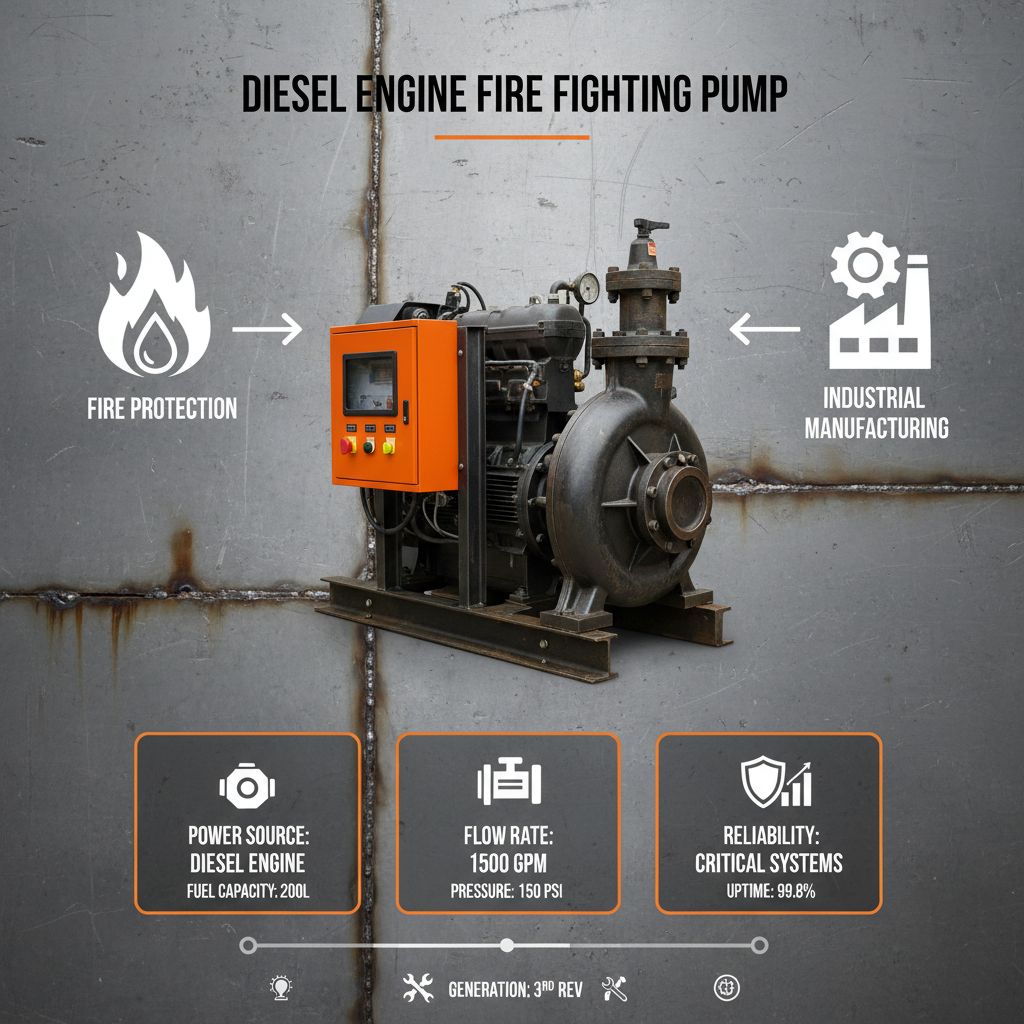
Reliable Diesel Engine Fire Fighting Pump for Emergency Response

Global Relevance of Diesel Engine Fire Fighting Pump

Reliable Diesel Engine Fire Fighting Pump for Emergency Response

On a global scale, the deployment of the diesel engine fire fighting pump is a cornerstone of international safety standards, including those set by NFPA (National Fire Protection Association) and ISO. In many developing regions or remote industrial zones, the lack of a stable power grid makes electric pumps a liability; here, diesel power provides the only guaranteed means of high-pressure water delivery during a crisis.

Statistics from global disaster response agencies indicate that the first ten minutes of a fire are the most critical. The ability of a diesel pump to engage rapidly and maintain a steady flow rate—regardless of external power outages—significantly reduces property loss and mortality rates in industrial accidents. This reliability makes it a mandatory requirement for airports, oil refineries, and large-scale manufacturing plants worldwide.

Defining the Diesel Engine Fire Fighting Pump

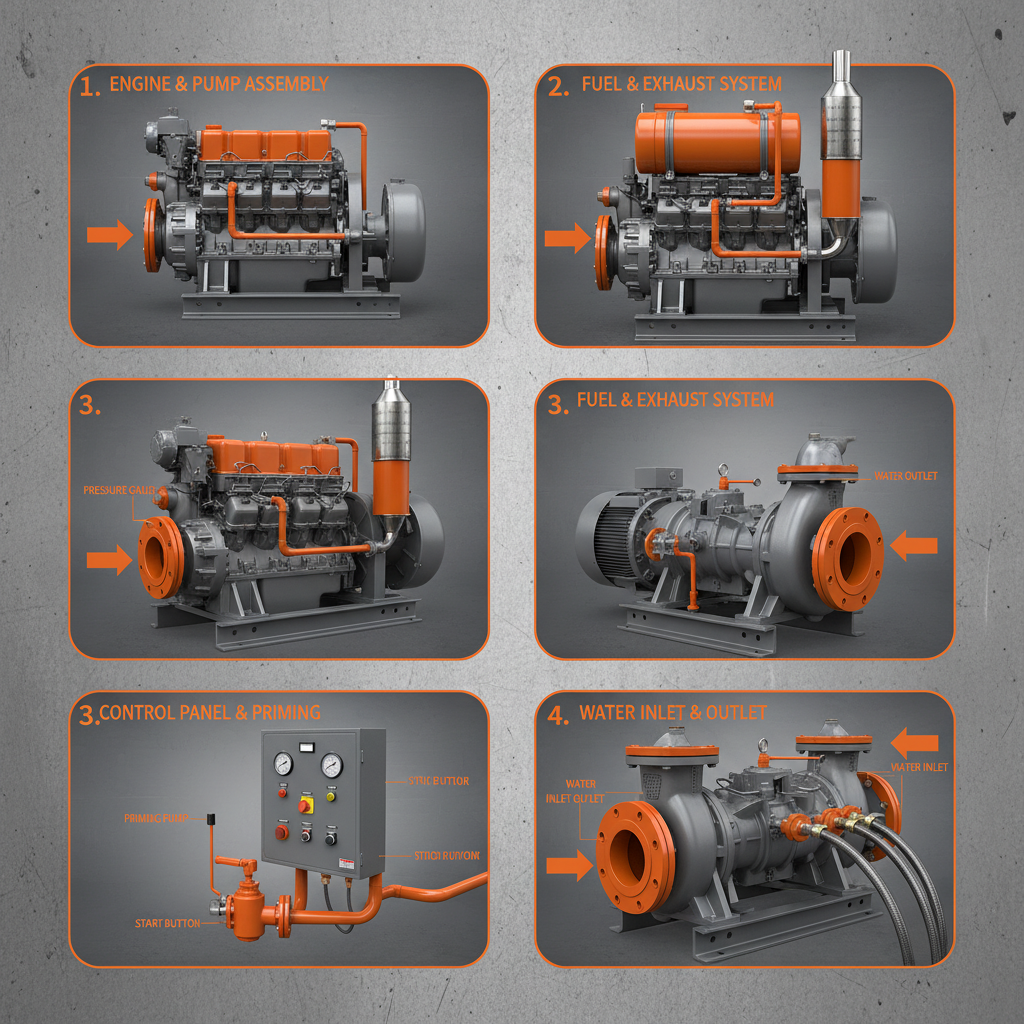
A diesel engine fire fighting pump is a specialized mechanical system that combines a heavy-duty internal combustion diesel engine with a centrifugal or positive displacement pump. Unlike standard water pumps, these are engineered for "extreme duty" cycles, meaning they can accelerate from a standstill to full load in seconds and maintain that peak performance for hours without overheating.

In the context of modern industry, these pumps serve as the primary or standby water source for sprinkler systems, hydrant networks, and foam-fighting systems. Their integration into a facility's safety architecture ensures that even if the primary electrical system is incinerated or shut down for safety, the fire suppression capability remains fully operational.

From a humanitarian perspective, portable versions of these pumps are vital for rural firefighting and post-disaster relief. When traditional infrastructure is destroyed by earthquakes or floods, a mobile diesel engine fire fighting pump allows responders to draw water from ponds, rivers, or makeshift tanks to prevent further loss of life and property.

Core Components and Engineering Factors

The durability of a diesel engine fire fighting pump begins with its chassis and cooling system. High-grade cast iron and corrosion-resistant alloys are used in the pump casing to withstand the abrasive nature of various water sources, ensuring that the unit does not fail due to internal wear during a critical operation.

Scalability is achieved through modular engine sizing. Depending on the required Gallons Per Minute (GPM) and the necessary head pressure, a diesel engine fire fighting pump can be scaled from small, portable units for forest fire fighting to massive, stationary installations capable of feeding hundreds of sprinklers in a skyscraper.

Cost efficiency in these systems is not measured by the initial purchase price, but by the "cost of failure." A high-quality diesel engine fire fighting pump utilizes optimized fuel injection systems and heavy-duty starters to minimize maintenance intervals while maximizing the probability of a successful start on the first attempt.

Global Applications and Real-World Use Cases

The application of the diesel engine fire fighting pump varies significantly by environment. In the petrochemical industry, these pumps are often situated in dedicated pump houses, designed to withstand ambient heat and potentially explosive atmospheres. They provide the immense pressure needed to push firefighting foam into the heart of a chemical blaze.

In forestry and wildlife management, the emphasis shifts to portability. Compact, diesel-driven pumps are mounted on trailers or small vehicles to allow rapid movement through rough terrain. In the American West or the Australian Outback, these units are the primary tool for creating wet-lines to stop the advance of wildfires in remote areas where no hydrants exist.

Performance Efficiency of Diesel Engine Fire Fighting Pump Types


Long-Term Value and Operational Advantages

The tangible benefit of investing in a premium diesel engine fire fighting pump is the absolute certainty of operation. From a logical standpoint, diesel fuel is more stable for long-term storage than gasoline and offers higher energy density, allowing the pump to run for extended periods during prolonged emergencies without frequent refueling.

Beyond the technical specs, there is an emotional layer of trust. For facility managers and first responders, knowing that the pumping system is independent of the power grid provides immense peace of mind. This reliability translates into lower insurance premiums and a higher safety rating for the facility, proving that the initial investment in high-quality diesel equipment pays dividends in risk mitigation.

Future Innovations in Pumping Technology

The evolution of the diesel engine fire fighting pump is currently trending toward "smart" integration. We are seeing the introduction of IoT-enabled monitoring systems that can alert maintenance crews via cloud signals if fuel levels are low, battery voltage drops, or if a leak is detected in the pump housing, shifting maintenance from reactive to predictive.

Sustainability is also playing a larger role. Modern diesel pumps are incorporating Tier 4 and Tier 5 emission standards to reduce the environmental impact of their exhaust. Furthermore, research into "hybrid" systems—combining a smaller diesel engine with a battery buffer—is allowing for softer starts and more precise control over water pressure, reducing the strain on the piping infrastructure.

Automation is the final frontier. Future systems are being designed to integrate with AI-driven fire detection arrays. In these scenarios, the diesel engine fire fighting pump can be automatically primed and activated the moment a heat sensor is triggered, eliminating the delay caused by human intervention and potentially saving thousands of square feet of property.

Common Challenges and Expert Solutions

One of the most common challenges with a diesel engine fire fighting pump is "wet stacking," which occurs when the engine is run at low loads for too long, leading to unburnt fuel accumulation in the exhaust. Experts recommend regular full-load testing—running the pump at its rated capacity for a set period—to clear the system and ensure engine health.

Another limitation is the degradation of diesel fuel over time, which can clog injectors and prevent starting. The solution lies in the use of fuel stabilizers and a strict fuel rotation schedule. Implementing a polished fuel system, where fuel is filtered and recirculated, can extend the lifespan of the fuel and ensure the pump starts instantly in an emergency.

Lastly, priming issues can delay the delivery of water. To overcome this, the industry has moved toward self-priming centrifugal pumps or the installation of dedicated priming tanks. By ensuring the pump is always "wet" or can quickly evacuate air from the suction line, the time from ignition to water flow is reduced to a few critical seconds.

Comparison of Diesel Engine Fire Fighting Pump Technical Specifications

Pump Category Flow Rate (GPM) Pressure Capability Maintenance Cycle
Industrial Stationary 2500 - 5000 Ultra-High Quarterly
Mobile Trailer Unit 500 - 1500 Medium-High Monthly
Forestry Portable 100 - 500 Medium Bi-Weekly
Foam Integration Pump 1000 - 3000 High Quarterly
High-Rise Booster 750 - 2000 Ultra-High Monthly
Emergency Relief Pump 300 - 800 Medium After Each Use

FAQS

What makes a diesel engine fire fighting pump better than an electric one?

The primary advantage is independence. Electric pumps require a functioning power grid or a massive backup generator. A diesel engine fire fighting pump is self-contained; as long as it has fuel, it will operate. This is critical because fires often destroy electrical wiring and power stations first, rendering electric pumps useless exactly when they are needed most.

How often should a diesel fire pump be tested?

Industry standards typically recommend a weekly "no-flow" test (starting the engine and running it for a few minutes) and a monthly "flow test" where the pump actually moves water. This ensures that the batteries are charged, the fuel is flowing, and the pump can achieve its rated pressure without cavitation.

Can these pumps be used with saltwater or brackish water?

Yes, but only if the pump end is constructed from corrosion-resistant materials such as bronze or stainless steel. Standard cast-iron pumps will corrode quickly if used with saltwater. When selecting a diesel engine fire fighting pump for coastal areas, always specify "marine-grade" or "corrosion-resistant" components to ensure longevity.

What is the typical lifespan of a diesel fire pump?

With proper maintenance, a professional-grade diesel fire pump can last 20 to 30 years. While the engine may require an overhaul or a replacement of the fuel system every decade, the pump casing and heavy-duty chassis are designed for extreme longevity, provided they are protected from severe environmental corrosion.

Do I need a special permit to operate a diesel fire pump?

While the pump itself doesn't usually require a permit, the installation must comply with local fire codes and environmental regulations regarding diesel storage and exhaust emissions. It is highly recommended to have the installation certified by a licensed fire protection engineer to ensure it meets NFPA or local equivalents.

How do I prevent the diesel fuel from spoiling in the tank?

To prevent fuel degradation, use high-quality fuel stabilizers and implement a "first-in, first-out" fuel rotation policy. Additionally, installing a fuel polishing system can remove water and contaminants from the diesel, ensuring that the engine starts reliably even after months of idling.

Conclusion

The diesel engine fire fighting pump remains an irreplaceable asset in the global fire safety landscape. By combining mechanical power with independence from the electrical grid, these systems provide the critical reliability needed to protect lives and infrastructure in the most challenging conditions. From the high-pressure requirements of industrial refineries to the portable needs of forest firefighting, the versatility and robustness of diesel-powered pumping are unmatched.

Looking forward, the integration of smart monitoring and greener engine technologies will only enhance the efficiency and sustainability of these machines. For any organization prioritizing risk management and safety, investing in high-quality, well-maintained diesel pumping equipment is not just a regulatory requirement—it is a commitment to resilience and the protection of human life. For professional fire safety solutions, visit our website: www.ffwfiresafety.com.

Daniel Hayes

Daniel Hayes

Daniel Hayes serves as the Regional Sales Manager for FEI FAN WEI, covering the Western US. With over 15 years of experience in fire safety equipment sales, Daniel brings a deep understanding of the challenges faced by wildland firefighters and forestry professionals. He's a graduate of Montana State University with
Previous High Performance Diesel Engine for Fire Fighting Pump Solutions
Next High Performance Booster Pump in Fire Fighting System Guide

SUBSCRIBE NEWSLETTER

We are very interested in your company's high-quality fire protection equipment and hope to learn more about the products and discuss purchasing matters.