



Selecting the right water delivery system is often the most critical decision in emergency response planning, as the failure of a single pump can render an entire firefighting operation ineffective. Whether managing vast forest tracts or protecting industrial complexes, the ability to move high volumes of water under pressure determines the success of containment efforts.
Recent shifts in wildland fire behavior have forced a transition toward more versatile, portable, and high-efficiency hardware. Modern agencies are moving away from static installations toward modular systems that can be rapidly deployed in rugged terrains where traditional infrastructure is non-existent.
To ensure operational readiness, procurement officers must evaluate a variety of technical specifications, from suction lift capabilities to power-to-weight ratios. For those looking to buy fire fighting pump systems, understanding the nuance between portable, vehicle-mounted, and diversion units is essential for matching equipment to the specific environment.


Historically, firefighting relied on heavy, fixed-infrastructure hydrants and massive trucks. However, as the frequency of forest and grassland fires increases, the industry has pivoted toward "Mobile Water Logistics." This approach emphasizes the ability to draw water from any available source—ponds, streams, or portable tanks—and transport it through flexible hose networks.
This evolution is led by the development of mini portable pumps and knapsack water mist systems, which allow a single operator to penetrate deep into brush where vehicles cannot enter. By decentralizing the water source, response teams can establish multiple attack lines, significantly increasing the probability of containment.
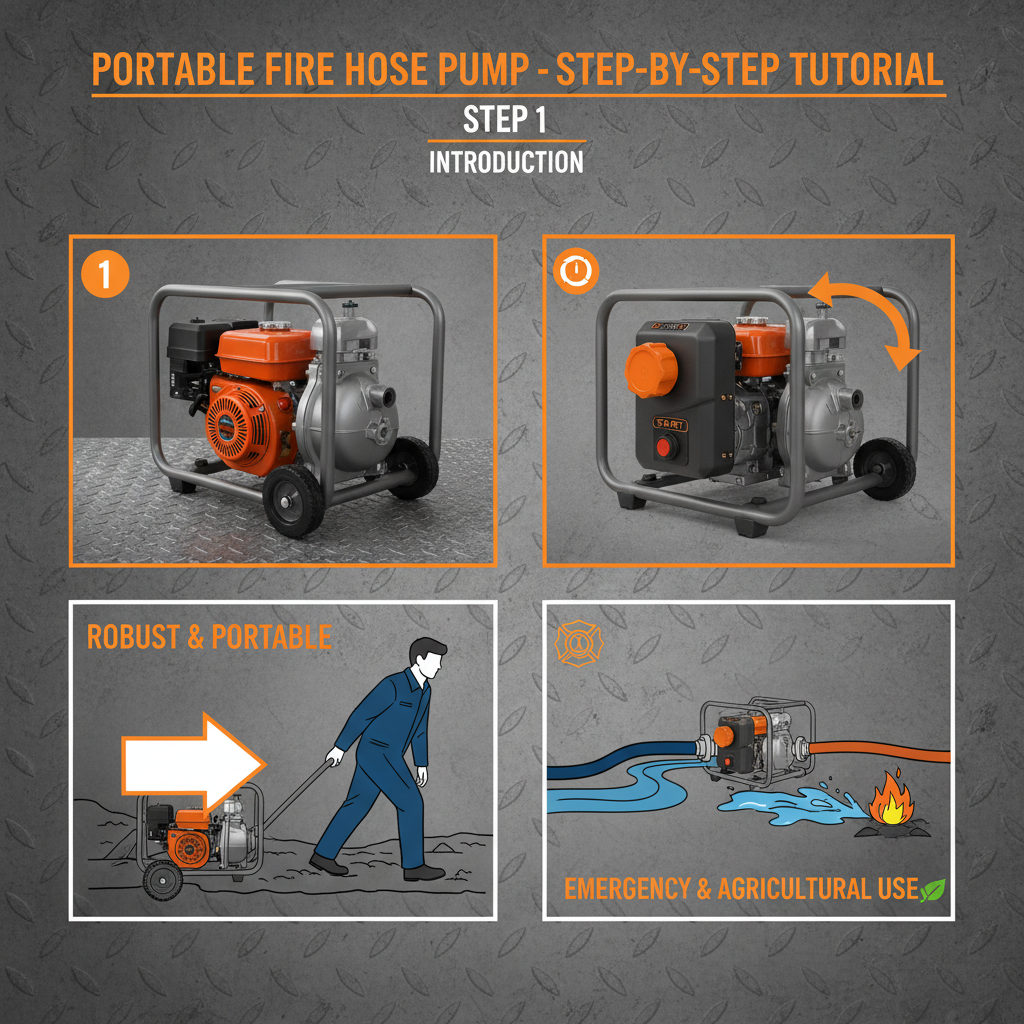
The efficiency of a fire pump is not measured by power alone, but by the relationship between flow rate (GPM/LPM) and head pressure. For vehicle-mounted pumps, the focus is on sustained high-volume output to support multiple nozzles. In contrast, portable units prioritize a high suction lift—the ability to pull water from a significant depth—to ensure they can operate effectively from deep ditches or riverbeds.
Material selection also plays a vital role in longevity. Components must withstand abrasive sediment often found in raw water sources. The integration of precision-engineered pump fittings and reinforced seals prevents cavitation and pressure loss, which are the primary causes of pump failure during extended operations.
Furthermore, the power source (gasoline, diesel, or pneumatic) determines the operational window. Pneumatic extinguishers and specialized fire pumps are often used in hazardous environments where electric sparks could ignite volatile gases, highlighting the need for a diversified equipment fleet based on the specific risk profile of the site.
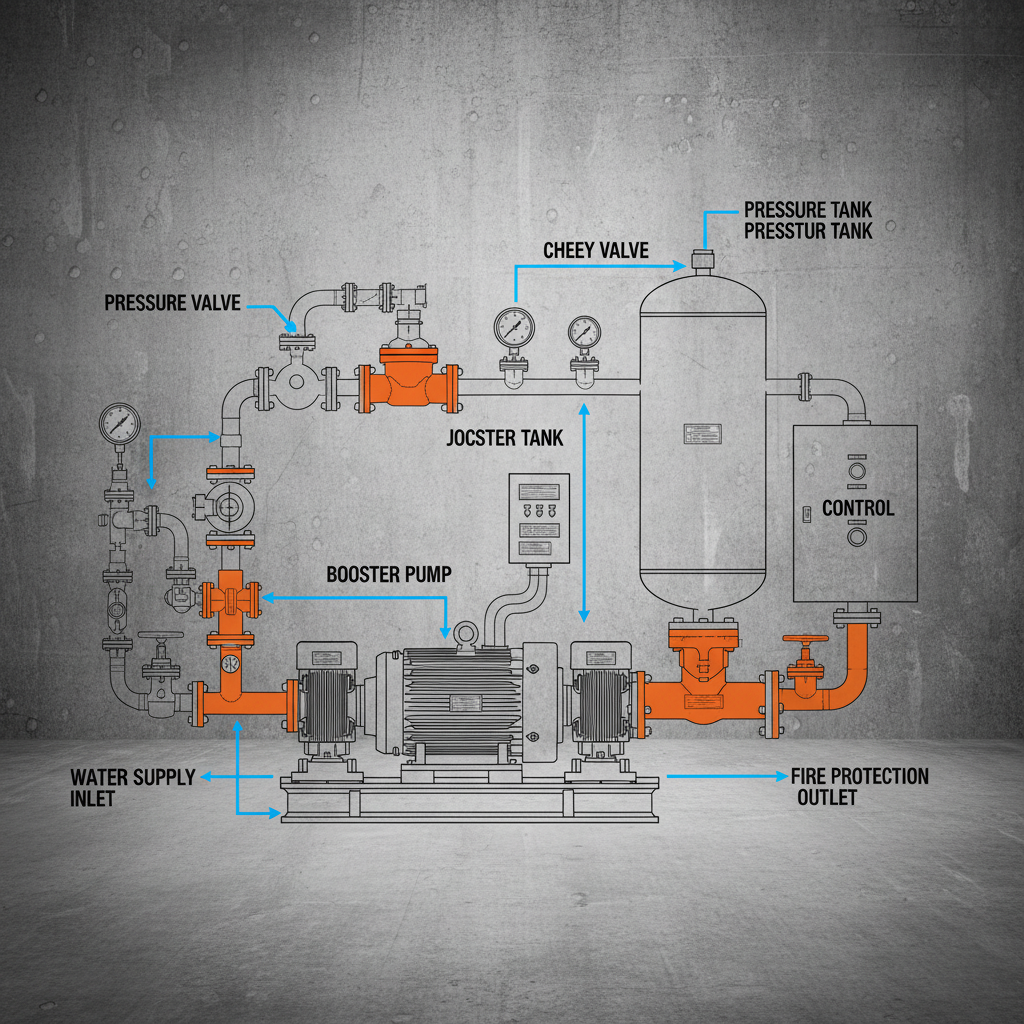
Effective water delivery requires a tiered system of pumping. A typical deployment begins with a high-capacity vehicle-mounted pump acting as the primary source, which then feeds a series of relay pumps to overcome the friction loss associated with long hose lays in hilly terrain.
The core objective of a relay pumping strategy is to maintain a constant nozzle pressure regardless of the distance from the water source, ensuring that firefighters have sufficient force to penetrate the fire's core.
In more fragmented environments, the use of mobile water diversion pumps allows teams to move water around obstacles or through narrow corridors. When combined with portable water tanks, these systems create "water hubs" that decouple the pump from the immediate water source, providing a buffer that ensures continuous flow even if the primary source fluctuates.
Comparing different pump categories requires a multi-dimensional index. While a vehicle-mounted pump offers maximum output, its mobility is limited. Conversely, a knapsack water mist pump offers extreme mobility but minimal volume. The ideal fleet balances these extremes to cover all phases of an emergency, from initial attack to final mop-up.
The following index evaluates various pump types based on their relative suitability for specific operational needs, focusing on mobility, output capacity, and ease of deployment.
In a typical forest fire scenario, the initial response often utilizes a combination of a portable fire pump and a mobile water diversion system. This allows crews to establish a perimeter without waiting for heavy tankers. As the operation scales, the integration of a vehicle-mounted pump provides the necessary volume to create a firebreak via high-pressure saturation.
Operational safety during these deployments is paramount. Firefighters operating these pumps in high-heat zones rely on specialized gear. For instance, forestry fireproof suits—such as the Aramid fiber Type I and Type II models—provide the necessary thermal protection and visibility through reflective strips, ensuring that pump operators remain safe while managing the water supply in smoke-filled environments.
The industry is moving toward "Smart Pumping," where flow rates and pressure levels are monitored in real-time via IoT sensors. This allows incident commanders to identify pressure drops instantly, indicating potential hose leaks or pump failures before they jeopardize the frontline.
There is also a significant push toward lightweight, high-torque electric motors to replace traditional combustion engines. This not only reduces the noise profile—allowing for better communication on the fire ground—but also eliminates the risk of fuel spills in sensitive ecological areas.
Additionally, the integration of modular chassis for pumps is becoming standard. This allows a single engine unit to be quickly swapped between a vehicle mount and a portable skid, maximizing the utility of the equipment investment across different terrains.
When deciding which system to acquire, procurement teams should avoid focusing solely on the lowest price point. The total cost of ownership includes maintenance intervals, the availability of spare pump fittings, and the training required for operators.
A balanced approach involves mapping the equipment to the most frequent "worst-case" scenarios the agency faces. If the primary challenge is rugged, roadless terrain, investment should lean toward portable and mini pumps. If the challenge is urban-industrial, vehicle-mounted high-volume systems are the priority.
The following table provides a relative suitability matrix to assist in matching the pump type to the operational requirement.
| Pump Type | Terrain Access | Output Volume | Deployment Speed |
|---|---|---|---|
| Vehicle-Mounted | Road/Trail Only | Very High | Moderate |
| Portable Pump | High/Rugged | Moderate | Fast |
| Mini Portable | Extreme/Remote | Low-Moderate | Very Fast |
| Knapsack Mist | Deep Brush | Low | Immediate |
| Diversion Pump | Variable | Moderate-High | Moderate |
| Relay System | Long Distance | High | Slow |
The primary difference lies in mobility and capacity. Vehicle-mounted pumps are integrated into trucks, offering massive water output and high pressure for large-scale fires but are limited by the vehicle's access. Portable pumps are lightweight, independent units that can be carried by hand to remote water sources, offering lower volume but far greater tactical flexibility in wildland or rugged environments.
Suction lift depends on the vertical distance between the pump and the water surface. You must evaluate the typical topography of your operating area. If you frequently draw water from deep ponds or riverbeds, you need a pump with a higher rated suction lift to prevent cavitation, which can damage the pump impeller and cause a loss of prime.
Key factors include the required flow rate (LPM/GPM), the maximum head pressure needed for your nozzles, the power source (gas, diesel, or electric), and the weight for portability. Additionally, check for the quality of pump fittings and the availability of compatible hoses, as these accessories are critical for maintaining a leak-proof system under pressure.
No, they serve different purposes. A knapsack mist pump is for "spot-fighting" or initial attack on small fires and mop-up operations where mobility is the only priority. A standard portable pump is designed to move significant volumes of water through hoses over a distance, making it a structural part of a water delivery network, whereas the knapsack is a personal tool.
Higher initial costs usually reflect better materials (like corrosion-resistant alloys), higher efficiency ratings, and more durable seals. In emergency services, the "value" is measured by reliability. A cheaper pump that fails during a critical operation is infinitely more expensive than a high-quality unit. Investment should focus on durability and ease of field maintenance.
The most common misconception is that "more power equals better performance." In reality, too much power in a small pump can lead to overheating or excessive fuel consumption without a proportional increase in effective water delivery. The goal is an optimal balance between the pump's displacement, the engine's torque, and the hose's flow capacity.
Building a resilient firefighting capability requires a strategic mix of hardware, where the pump is the heart of the operation. By aligning the technical specifications of portable, vehicle-mounted, and diversion systems with the specific geography of the risk area, agencies can ensure a consistent and reliable water supply.
As technology advances toward smarter, lighter, and more efficient systems, the focus must remain on the synergy between the equipment and the personnel. High-performance pumps, when paired with professional-grade protective gear and a clear deployment strategy, provide the most effective defense against the increasing threat of wildland and industrial fires.

SUBSCRIBE NEWSLETTER
We are very interested in your company's high-quality fire protection equipment and hope to learn more about the products and discuss purchasing matters.

Hebei FeiFanWei Technology Co.,Ltd. is a comprehensive enterprise specialized in the research, production, sales and training of emergency rescue equipment.


PRODUCTS
PRODUCTS
QUICK LINKS
CONTACT US
Hebei FeiFanWei Technology Co.,Ltd. is a comprehensive enterprise specialized in the research, production, sales and training of emergency rescue equipment.
Copyright © 2026 Hebei FeiFanWei Technology Co.,Ltd. All Rights Reserved. Sitemap | Privacy Policy | Top Blog | Global Service | Hot Products | Knowledge