








Essential Guide to Firefighter Vehicle Extrication Tools
In the critical moments following a vehicular accident, the difference between life and death often depends on the speed and efficiency of the rescue operation. High-performance firefighter vehicle extrication tools are engineered to breach reinforced steel, glass, and composite materials to create an escape path for trapped victims. Modern automotive engineering, while safer for passengers, has introduced ultra-high-strength steels (UHSS) that require specialized equipment to penetrate. This guide explores the essential tools every rescue squad needs, the technology driving their evolution, and how to select the right gear for maximum operational efficiency.
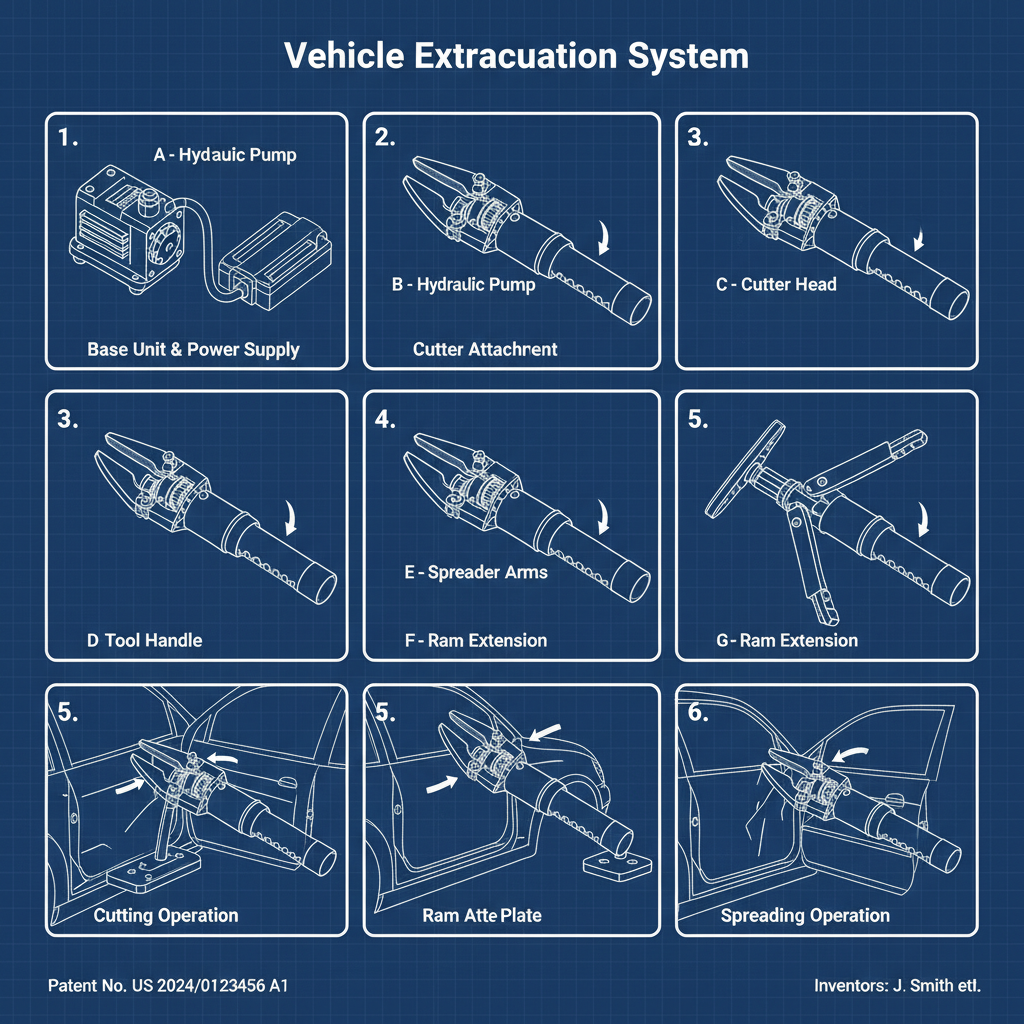
The Role of Hydraulic Spreaders and Cutters
Hydraulic tools remain the backbone of any rescue operation. Spreaders are used to "pop" doors or move dashboards, while cutters are designed to shear through A, B, and C pillars. The shift from hose-dependent hydraulic pumps to battery-powered units has revolutionized the field, allowing responders to reach victims faster without the clutter of hydraulic lines. When utilizing firefighter vehicle extrication tools, precision and force must be balanced to avoid further injuring the patient during the "golden hour" of trauma care.
Pro Tip: Always identify the vehicle's reinforced zones using a rescue sheet before applying cutters to ensure the tool can handle the specific grade of steel.
Comparing Types of Firefighter Vehicle Extrication Tools
Not all rescue scenarios are the same. Depending on the vehicle type—electric, hybrid, or internal combustion—the approach to extrication varies. While hydraulic tools offer raw power, manual tools provide reliability and versatility in tight spaces. Understanding the trade-offs between battery-operated and traditional hydraulic firefighter vehicle extrication tools is key for equipment procurement managers.
Advanced Technology in Extrication Gear
The evolution of firefighter vehicle extrication tools has been driven by the materials used in modern cars. Boron steel and other high-tensile alloys can shatter traditional cutting blades. In response, manufacturers have developed tools with higher closing forces and optimized blade geometries. Furthermore, the integration of telemetry and smart batteries allows fire chiefs to monitor tool status and power levels in real-time, ensuring that equipment doesn't fail during a critical operation.
Operational Safety and Tool Maintenance
Using powerful firefighter vehicle extrication tools involves inherent risks. "Tool kick" can occur if a cutter slips, potentially injuring the operator or the victim. Proper training in tool positioning and the use of Personal Protective Equipment (PPE) is non-negotiable. Additionally, a rigorous maintenance schedule—including hydraulic fluid checks, battery calibration, and blade inspection—ensures that tools perform reliably under pressure. A tool that fails in the field is not just a technical glitch; it is a liability to human life.
Technical Specifications for Professional Extrication Kits
When purchasing a kit, it is essential to look at the technical specifications to ensure they meet the demands of your local accident profile. For example, urban rescue teams may prioritize compact, battery-powered tools for agility, while highway patrol units might prefer high-capacity hydraulic systems. Below are the typical specifications for professional-grade firefighter vehicle extrication tools used globally.
The Future of Vehicle Rescue Equipment
As we transition toward a future of electric vehicles (EVs), the nature of firefighter vehicle extrication tools is evolving again. The presence of high-voltage battery packs requires tools that are non-conductive or specifically designed to avoid cutting into battery casings. We are seeing a rise in "hybrid" tools—combinations of cutters and spreaders in one unit—to reduce the weight carried by rescue personnel. The goal is to maximize the "extraction speed" while minimizing the risk to both the rescuer and the victim.
Conclusion: Enhancing Rescue Success with Premium Tools
Efficiency in vehicle rescue is a combination of skilled personnel and state-of-the-art equipment. By investing in high-quality firefighter vehicle extrication tools, emergency services can ensure they are prepared for the challenges posed by modern automotive engineering. From the raw power of hydraulic cutters to the agility of battery-powered spreaders, having the right tool for the right task is the ultimate key to saving lives. Prioritize durability, power, and safety to keep your team and your community secure.
Frequently Asked Questions (FAQs)
What is the main difference between hydraulic and battery-powered extrication tools?
The primary difference lies in mobility and setup time. Traditional hydraulic tools require a pump and heavy hoses, which can limit the operator's movement and take longer to deploy. Battery-powered tools are "stand-alone" units that allow firefighters to move freely around the vehicle and begin cutting or spreading immediately. However, traditional hydraulics sometimes offer slightly higher consistent power for the most extreme industrial-grade steels, though the gap is closing rapidly with new battery technology.
How do I handle Ultra-High-Strength Steel (UHSS) with my tools?
UHSS, such as Boron steel, is extremely hard and can damage lower-grade cutting blades. To handle this, you must use tools specifically rated for UHSS. Always use a "pinch point" strategy—trying to find a weaker spot in the vehicle's structure rather than cutting directly through the thickest part of the reinforced pillar. It is also critical to ensure your firefighter vehicle extrication tools are maintained and sharpened to prevent blade twisting or failure during the cut.
How often should extrication tools be serviced?
Extrication tools should undergo a basic inspection after every use and a comprehensive professional service at least once a year. For hydraulic tools, this includes checking for leaks, testing pump pressure, and replacing hydraulic fluid. For battery tools, it involves testing battery health, cleaning contact points, and checking for structural fatigue in the arms. Regular servicing prevents catastrophic failure during a rescue operation and extends the overall lifespan of the equipment.
Are there specific tools needed for Electric Vehicle (EV) extrication?
While the basic mechanical tools (cutters/spreaders) are the same, EV extrication requires additional safety tools. This includes insulated cutting tools to prevent electrical arcing and specialized "cut-off" guides to ensure rescuers do not accidentally sever high-voltage orange cables. The strategy shifts toward "stabilize and isolate" before the heavy firefighter vehicle extrication tools are used to remove the roof or doors, ensuring the battery pack remains undisturbed.





 English
  Arabic
  Bengali
  China
China  French
  German
  Hausa
Hausa  Indonesian
  Italian
  Japanese
  Javanese
  Malay
Malay  Persian
  Portuguese
  Punjabi
  Russian
  Spanish
  Swahili
  Telugu
  Vietnamese