








High Capacity Water Tank and 900 lpm fire pump price Guide
Establishing a reliable water source is the most critical challenge in remote wildfire suppression and emergency rescue operations. When firefighting teams operate far from established hydrants, the synergy between high-capacity pumps and rapid-deployment storage becomes the backbone of the operation. A mobile self-supporting water storage tank provides the necessary volume to keep high-flow pumps operational without constant refills, ensuring that critical firefighting efforts are not interrupted by logistical delays. This infrastructure is essential for stabilizing a perimeter and providing the sustained pressure required for effective water delivery in rugged terrains.
For procurement managers and emergency response coordinators, the focus often shifts to the balance between material durability and deployment speed. Integrating a high-strength PVC-coated storage system allows for a rapid transition from transport to operational status, significantly reducing the time it takes to establish a water relay. By understanding the technical specifications of self-supporting bladders, organizations can better optimize their equipment kits to match the specific flow rates of their pumping assets, ensuring maximum efficiency in high-stakes environments.

Engineering the Core: High-Strength Materials for Rugged Field Deployment
The operational effectiveness of a mobile water storage tank depends entirely on its ability to withstand extreme internal pressure and external abrasion. Our tanks are engineered using 980g/m² PVC coating fabric with a material thickness of 0.8mm, providing a robust barrier against tears and punctures. The base structure utilizes polyester fabric with a density of ≥1000D and a thickness of ≥0.7mm, ensuring that the tank remains stable and secure even when fully loaded on uneven forest floors or rocky grasslands.
From a technical perspective, the mechanical strength is measured by a breaking strength of ≥2500 N/cm and a tearing resistance of ≥400N. These specifications are not merely numbers; they represent the tank's ability to resist the dynamic forces exerted by fluctuating water levels and the accidental impact of firefighting equipment. Furthermore, the material is rated for temperature extremes ranging from -20 ℃ to 70 ℃, making it suitable for deployment in both arctic conditions and scorching summer wildfire zones.
The self-supporting design eliminates the need for external rigid frames, which simplifies the logistics chain. By utilizing an inflatable structure, the tank can be transitioned from a collapsed state to a full operational volume in less than one minute. This rapid setup is a decisive factor in emergency scenarios where every second saved in infrastructure deployment translates to more effective fire containment.

Operational Versatility Across Diverse Industrial and Emergency Scenarios
While primarily designed for fire-fighting and emergency rescue, the architectural flexibility of our self-supporting tanks allows them to serve a wide array of critical industries. In agricultural settings, these tanks provide an immediate solution for irrigation water storage and rainwater harvesting, especially in regions with seasonal water scarcity. In the industrial sector, they are utilized for storing process water or as temporary containment for sewage and wastewater during maintenance phases.
The adaptability extends to specialized humanitarian and aquaculture projects. For instance, in disaster relief zones, these tanks are deployed for domestic drinking water storage and water purification projects, providing life-saving resources to displaced populations. In aquaculture, their high tear resistance and non-toxic PVC coating make them ideal for temporary fish tanks or brine storage, maintaining water integrity without the need for permanent concrete structures.
Customization is a core capability of our production line. Depending on the specific spatial requirements of the user, we offer several configurations:
- Pillow Tanks: Ideal for low-profile storage and easy transport.
- Rectangular Bladders: Optimized for tight spaces and structured layouts.
- Onion-Shape Tanks: Designed for higher volume stability and pressure distribution.
- Specialized Storage: Customized versions for fuel storage or oil well cementing.
Optimizing Water Logistics for High-Flow Firefighting Equipment
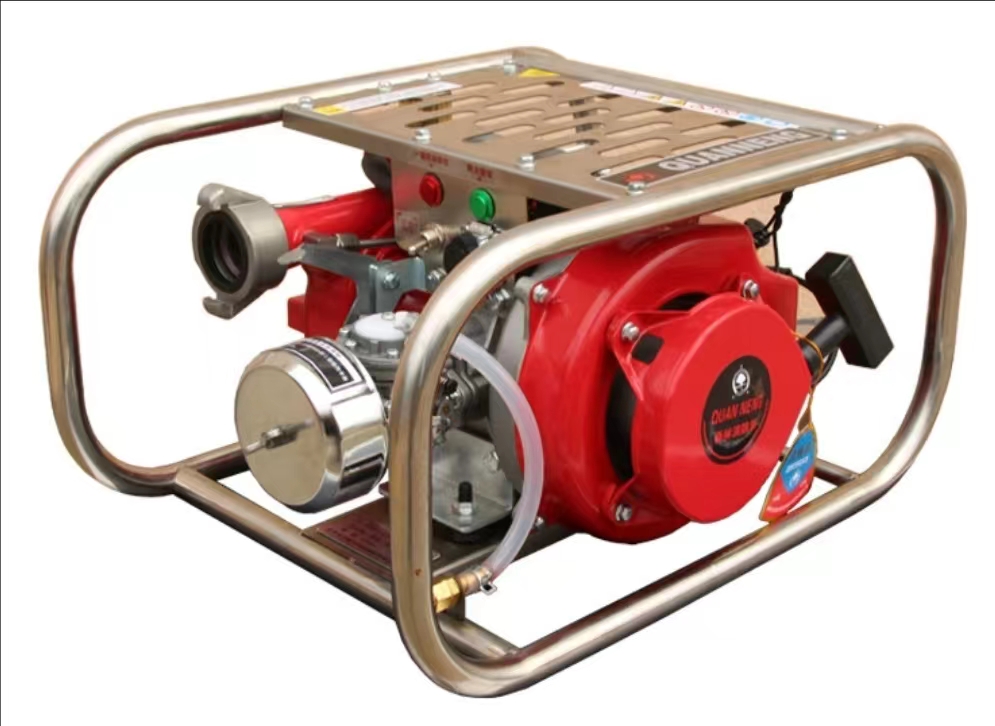
The critical link in any fire suppression strategy is the flow rate. When using equipment such as a 900 lpm fire pump price evaluation usually includes the cost of the water source infrastructure. A pump capable of moving 900 liters per minute will deplete a small tank rapidly; therefore, matching the tank capacity (from 1T to 30T) to the pump's output is essential to prevent cavitation and pump failure. A 10T or 20T tank provides a sufficient buffer to allow shuttle tankers to refill the bladder without forcing the pump to shut down.
Logistical efficiency is improved by the "open top" design, which allows for rapid filling via gravity or high-pressure hoses. The integration of these tanks into a "water relay" system—where multiple bladders are placed at intervals—enables firefighting teams to push water deeper into wildlands where vehicle access is limited. This strategic placement ensures that the pump always has a steady head of water, maintaining consistent pressure at the nozzle.
For procurement officers, the value lies in the long-term durability and reduced maintenance. Unlike rigid steel tanks, these flexible bladders do not rust, can be folded into a small footprint for storage, and are significantly cheaper to transport. The high-strength PVC ensures that the investment lasts through multiple deployment cycles in demanding environments.
Technical Specification and Application Matrix
| Specification Item | Technical Value / Material | Performance Metric | Primary Application |
|---|---|---|---|
| Main Fabric | 980g/m² PVC Coating | High Tear Resistance | Wildfire Suppression |
| Base Material | Polyester ≥ 1000D | Breaking Strength ≥2500 N/cm | Industrial Water Storage |
| Thickness | 0.7mm to 0.8mm | Puncture Resistant | Emergency Rescue |
| Temp Range | -20 ℃ to 70 ℃ | Thermal Stability | All-Weather Deployment |
| Capacity Range | 1T, 2T, 5T, 10T, 20T, 30T | Scalable Volume | Humanitarian Aid |
Evaluating Supplier Capabilities for Emergency Equipment Procurement
Selecting a supplier for fire-fighting equipment requires a deep dive into their manufacturing ecosystem and quality control processes. Hebei FeiFanWei Technology Co.,Ltd. operates as a comprehensive enterprise, integrating research, production, and training. By combining mature technological processes with a network of 125 professional partners, we ensure that every component—from the PVC fabric to the reinforced seams—meets rigorous stability and quality standards.
The ability to customize the shape and size of the water tank is a key differentiator. Whether a project requires a specialized onion-shape tank for maximum volume or a rectangular bladder for specific site constraints, our engineering team can adapt the design to meet the user's operational needs. This flexibility is backed by a business philosophy of "occupying the market with strength, stabilizing the market with service, and expanding the market with innovation."
Quality assurance in the firefighting industry is not optional; it is a matter of safety. Our products are designed to withstand rugged environments and demanding applications, a fact trusted by firefighters globally. By focusing on high-quality, stable performance and low-cost delivery, we provide the tools necessary for the men and women who protect lives and property in the most challenging conditions.
Strategic Trends in Mobile Water Infrastructure and Disaster Response
The trend in emergency response is moving toward "modular agility." Instead of relying on heavy, permanent infrastructure, agencies are adopting rapid-deployment systems that can be air-dropped or transported by light vehicles. The mobile self-supporting water tank is at the center of this shift, allowing for the creation of instant "water hubs" in previously unreachable areas. This modularity reduces the logistical footprint while increasing the operational reach of firefighting teams.
Future developments in material science are likely to introduce even lighter, higher-strength polymers that further reduce deployment time and increase the lifespan of the bladders. Additionally, the integration of smart sensors for real-time volume monitoring is becoming a priority, allowing commanders to know exactly when a tank needs refilling without manual inspection. This data-driven approach minimizes the risk of pump dry-run and optimizes the shuttle tanker rotation.
For those planning their 2025-2030 equipment upgrades, the focus should be on interoperability. Ensuring that water storage tanks are compatible with various pump flow rates and hose fittings is crucial. Investing in a versatile range of capacities (from 1T to 30T) ensures that the response team can scale their water supply based on the intensity of the fire and the available natural resources in the area.
Frequently Asked Questions Regarding Mobile Water Storage
What is the main advantage of a self-supporting tank over a rigid tank?
The primary advantages are rapid deployment, ease of transport, and cost-efficiency. A self-supporting tank can be inflated and filled in minutes and folded into a small package for transport, whereas rigid tanks require heavy machinery for installation and significant storage space when not in use.
Can these tanks be used for liquids other than water?
Yes, we provide customized versions for fuel storage and oil well cementing. However, the material compatibility depends on the chemical properties of the liquid; please contact our technical team to ensure the PVC coating is suitable for your specific chemical storage needs.
How do I choose the right capacity for my fire pump?
The choice depends on your pump's flow rate and the refill frequency of your shuttle tankers. For high-flow pumps, larger tanks (10T to 30T) are recommended to provide a sufficient buffer and prevent the pump from running dry between refills.
What is the expected lifespan of the PVC coated fabric?
The lifespan depends on the environment and usage frequency. Our tanks use high-strength 980g/m² PVC and 1000D polyester, designed for high wear and tear resistance, ensuring long-term durability in rugged field conditions.
Are these tanks suitable for extreme cold or heat?
Yes, our tanks are engineered to operate in temperatures ranging from -20 ℃ to 70 ℃, making them suitable for both winter forest fires and high-temperature industrial environments.
How long does it take to set up a mobile water tank?
The inflatable design allows for a setup time of ≤ 1 minute, providing almost instantaneous water storage capacity once the site is reached.
Technical References and Industry Standards
- National Fire Protection Association (NFPA) - Water Supply Standards
- ISO Standards for Flexible Intermediate Bulk Containers
- FEMA - Emergency Water Supply and Distribution Guidelines
- US Coast Guard - Portable Water Bladder Operational Manuals
Ensuring a stable water supply is the foundation of every successful firefighting operation. By combining high-strength PVC storage solutions with precision-engineered pumps, emergency teams can effectively combat wildland fires and manage industrial crises. For detailed specifications or custom configuration requests, please contact our engineering team.
Related News and Technical Guides






 English
 Arabic
 Bengali
 China
 French
 German
 Hausa
 Indonesian
 Italian
 Japanese
 Javanese
 Malay
 Persian
 Portuguese
 Punjabi
 Russian
 Spanish
 Swahili
 Telugu
 Vietnamese