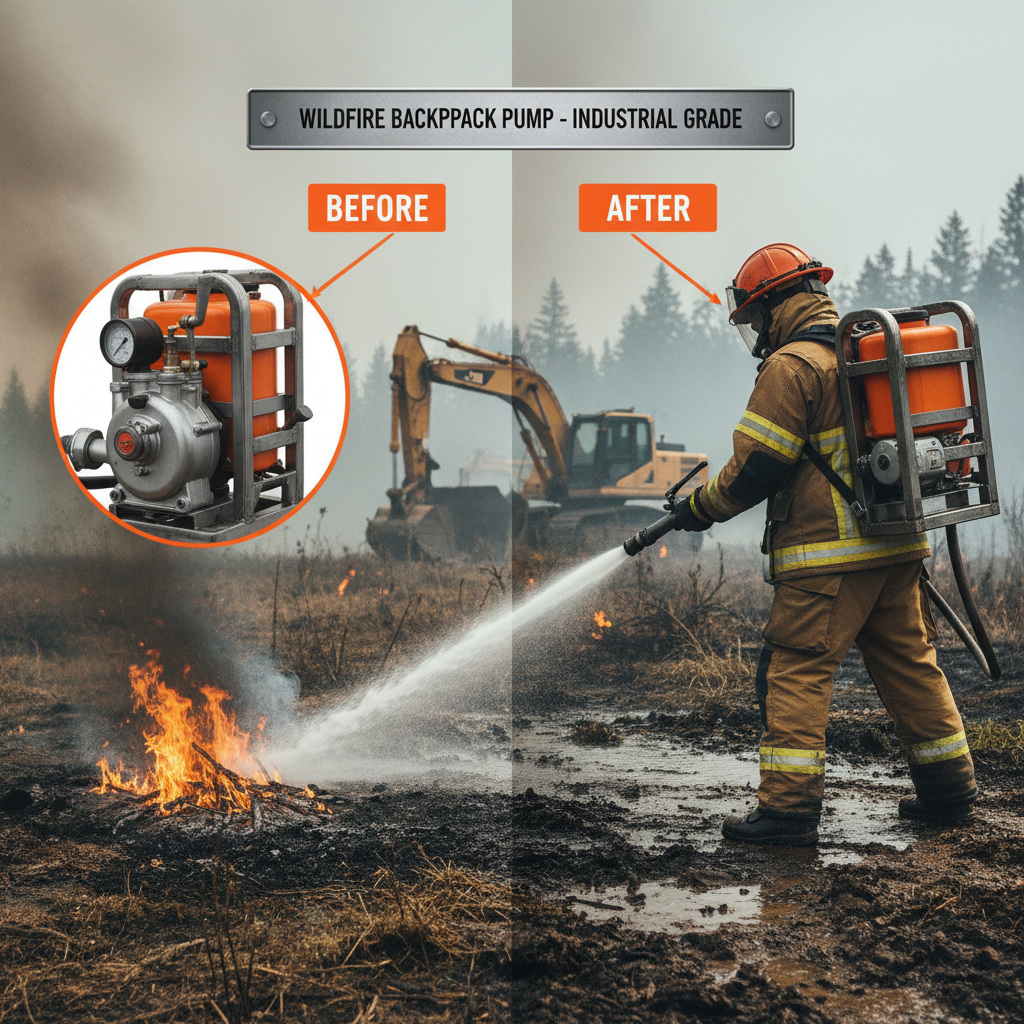




The operational effectiveness of wildland firefighting relies heavily on the precision of hand tools and the reliability of water delivery systems. When emergency responders look to buy fire axe and complementary equipment, they are not just purchasing tools but investing in survival-critical hardware that must perform under extreme thermal stress and rugged terrain.
The challenge for procurement officers in the firefighting sector is balancing material durability with ergonomic weight. A tool that is too heavy exhausts the operator, while one that is too light may fail during critical breach-and-entry or fire-break operations. This tension drives the current engineering shift toward advanced alloys and composite handles in the specialized equipment manufacturing industry.
This analysis examines the technical selection criteria for essential forestry firefighting tools and how these manual implements integrate with high-capacity water supply systems to create a comprehensive fire suppression strategy.


The engineering of a firefighting axe focuses on kinetic energy transfer and edge retention. High-carbon steel is typically utilized to ensure that the blade can penetrate hardwood and structural debris without chipping or rolling the edge.
From a manufacturing perspective, the heat treatment process is the most critical stage. Improper tempering leads to brittleness, which can result in catastrophic tool failure during a rescue operation, posing a severe risk to the firefighter.
When evaluating tools within the "Forest Fire Hand Tools" category, the choice of handle material determines the tool's longevity and user fatigue levels. Fiberglass-reinforced polymers have largely replaced traditional hickory in professional settings due to their resistance to rot, chemicals, and high-impact shocks.
Moreover, the head-to-handle connection must be mechanically locked. Engineering failures often occur at the eye of the axe; therefore, modern professional tools utilize epoxy resins and specialized wedges to ensure the head remains secure under extreme centrifugal force.
For those who buy fire axe specifications, it is essential to verify the Rockwell Hardness (HRC) of the steel. A balance between 45 and 55 HRC is generally sought to provide sufficient hardness for cutting while maintaining enough toughness to absorb shock.
Manual tools are rarely used in isolation; they are the vanguard for water-based suppression. Fire-breaks created by hand tools allow for the safe deployment of pumping equipment.
Hebei FeiFanWei Technology Co.,Ltd. optimizes this ecosystem by providing both the "Forest Fire Hand Tools" for line cutting and the "Vehicle-Mounted Fire Pumps" for heavy-duty suppression, ensuring that the physical tools and the mechanical pumps are engineered for the same rugged environments.
Evaluating the effectiveness of rescue equipment involves analyzing the trade-off between weight and operational capacity. In forestry contexts, the ability to transport equipment manually over steep terrain is as important as the tool's raw power.
The following data represents a normalized engineering assessment of different tool and pump configurations based on their utility in remote wildland environments.
In a representative engineering scenario, a rapid response team utilizes "Forest Fire Hand Tools" to clear a 10-meter wide fire-break. This manual labor is the prerequisite for deploying the Model250 pump system, which leverages its 35HP power and 250 L/min flow to establish a water curtain.
The effectiveness of the deployment depends on the "extreme range" of the equipment. A pump capable of a 45m range allows firefighters to maintain a safe distance from the heat zone while the manual tools ensure that the hose lines are not snagged by vegetation, demonstrating a critical interdependence between simple tools and complex machinery.
The industry is moving toward "smart" firefighting toolkits. While the basic function of a fire axe remains constant, the integration of lightweight titanium alloys is reducing user fatigue without sacrificing the impact force required for breaching.
Furthermore, the trend is shifting toward modularity. Future "Fire Fighting Toolkits" are being designed as integrated systems where hand tools, "Forestry Fireproof Suits," and "Knapsack Water Mist Fire Pumps" share a common ergonomic interface to streamline the equipping process.
We anticipate an increase in the adoption of hybrid propulsion for portable pumps, blending electrical start-up systems with high-efficiency internal combustion engines to ensure reliability in oxygen-depleted environments.
For procurement officers, the decision to buy fire axe or other specialized tools should be based on a weighted matrix of durability, weight, and environmental suitability.
The following table compares different configuration profiles for wildland fire equipment to guide the selection process based on the intensity of the application.
It is important to note that "Industrial Baseline" represents the minimum regulatory requirement, while "High-Duty" is designed for prolonged professional use in extreme conditions.
| Configuration Type | Material Grade | Weight Factor | Recommended Use Case |
|---|---|---|---|
| Basic Configuration | Standard Carbon Steel | Moderate | General Maintenance |
| Standard Configuration | Heat-Treated Alloy | Balanced | Municipal Fire Dept |
| High-Duty Configuration | Premium Alloy / Fiberglass | Optimized | Professional Forestry |
| Precision Configuration | Titanium-Infused | Ultra-Light | Rapid Response Teams |
| Automated Configuration | Hybrid Systems | Heavy | Vehicle-Mounted Ops |
| Industry Baseline | Commercial Grade | Variable | Basic Compliance |
Prioritize the steel grade (high-carbon or alloy), the tempering process for hardness and toughness, and the handle material. Professional-grade tools should utilize fiberglass or high-impact composites to prevent splintering and reduce weight. Ensure the head is securely fastened with industrial-grade resins to prevent detachment during high-velocity impacts.
The Model250 provides the heavy-duty water supply (250 L/min flow) that manual tools cannot. Hand tools are used to clear the perimeter and create fire-breaks, allowing the pump's hoses to be deployed without obstruction. This synergy ensures that water can be transported up to 10,000 meters into rugged terrain where vehicles cannot reach.
Yes, from an engineering standpoint, fiberglass is superior due to its non-conductive properties, resistance to moisture-induced rot, and higher strength-to-weight ratio. While wood has traditional appeal, fiberglass provides consistent performance across varying temperatures and humidity levels, which is critical for professional firefighting.
Maximum lift (e.g., 800m for the Model250) indicates the pump's ability to push water uphill or over significant elevations. In forestry fire-fighting, water sources are often in valleys, while the fire is on a ridge. A high lift capacity ensures that water pressure remains sufficient at the nozzle despite the vertical climb.
Maintenance should include regular inspections of the head-to-handle bond, sharpening the blade to maintain cutting efficiency, and applying corrosion-resistant coatings to the steel. Handles should be checked for stress fractures or UV degradation, especially in high-exposure wildland environments.
A toolkit should be selected based on the specific environment (e.g., dense forest vs. grassland). It must contain a balanced mix of breaching tools (axes), scraping tools (swatters), and delivery tools (backpack sprayers). The total weight of the toolkit must be compatible with the endurance limits of the personnel wearing "Forestry Fireproof Suits."
The efficiency of wildland fire suppression is a result of the precise integration between manual labor and mechanical power. While the decision to buy fire axe focuses on the immediate tactical need for breach and clear operations, the overall strategy must incorporate high-capacity water delivery systems to ensure containment.
For operators and procurement managers, the implication is clear: investing in high-spec materials (fiberglass, heat-treated alloys) and high-performance pumps (Model250) reduces the risk of equipment failure and increases the safety margin for personnel. A synchronized approach to equipment procurement—matching hand tools with industrial pumps—remains the most effective way to combat the increasing complexity of forest fires.

SUBSCRIBE NEWSLETTER
We are very interested in your company's high-quality fire protection equipment and hope to learn more about the products and discuss purchasing matters.

Hebei FeiFanWei Technology Co.,Ltd. is a comprehensive enterprise specialized in the research, production, sales and training of emergency rescue equipment.


PRODUCTS
PRODUCTS
QUICK LINKS
CONTACT US
Hebei FeiFanWei Technology Co.,Ltd. is a comprehensive enterprise specialized in the research, production, sales and training of emergency rescue equipment.
Copyright © 2026 Hebei FeiFanWei Technology Co.,Ltd. All Rights Reserved. Sitemap | Privacy Policy | Top Blog | Global Service | Hot Products | Knowledge