








Essential Firefighter Tools for Turnout Gear
When facing the dangers of a fire, firefighters rely on specialized firefighter tools alongside their turnout gear for optimal safety and efficiency. These tools are designed to withstand extreme heat, provide reliable performance, and aid in rescue operations. This article will explore the crucial tools firefighters use, their applications, and considerations when selecting the right equipment. Investing in high-quality tools is paramount for ensuring the safety and effectiveness of firefighters in the field.
Key Components of a Firefighter's Tool Set
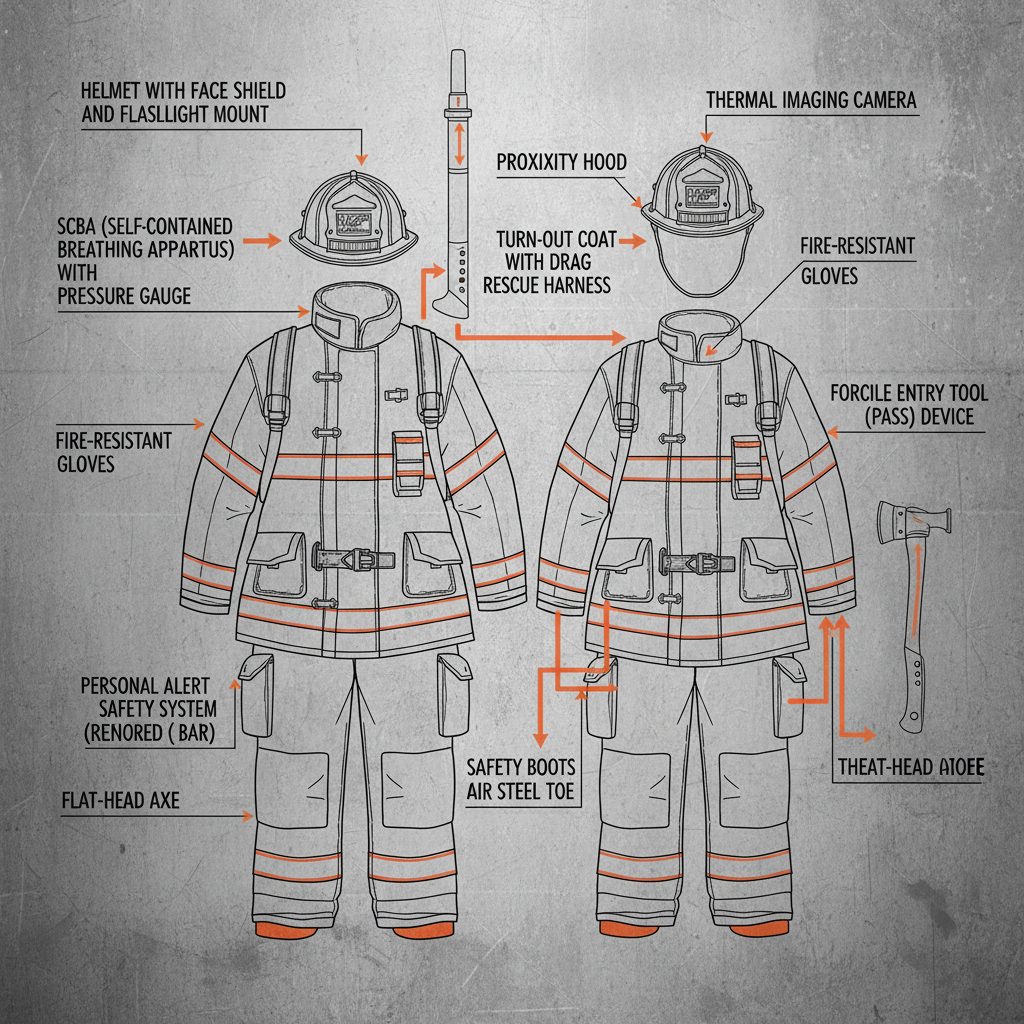
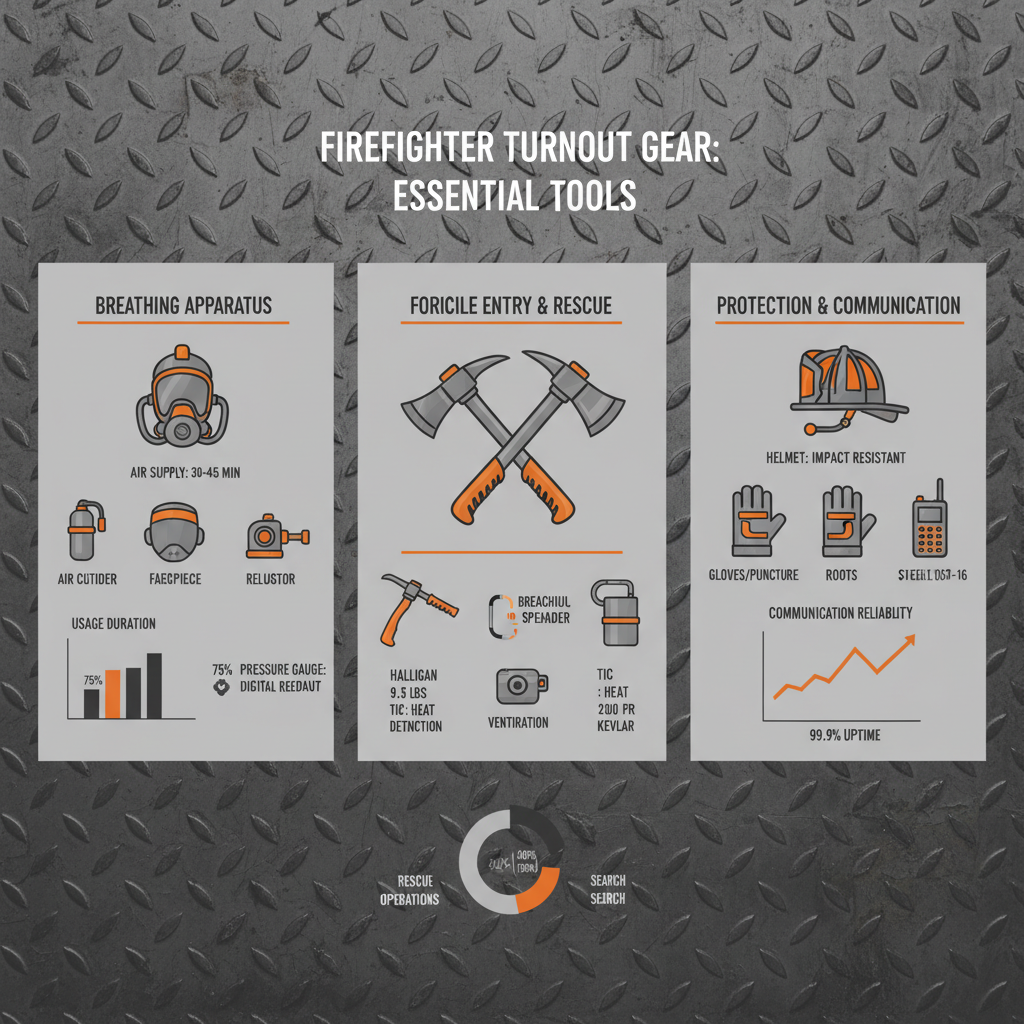
A firefighter’s tool set isn’t just about brute force; it’s about having the right instrument for each specific task. Essential tools include forcible entry tools like halligan bars and flathead axes for gaining access to structures. Thermal imaging cameras (TICs) allow firefighters to see through smoke, locating victims and identifying hot spots. Self-contained breathing apparatus (SCBA) are vital for providing breathable air in hazardous environments. Additionally, rescue saws, rope tools, and ventilation fans are indispensable for various emergency scenarios. Understanding the purpose and proper use of each tool is crucial for firefighter safety and effective incident management.
Essential Tools: Forcible entry tools, Thermal Imaging Cameras (TICs), Self-Contained Breathing Apparatus (SCBA), Rescue saws, rope tools, ventilation fans.
Forcible Entry Tools: Halligan Bars vs. Flathead Axes
When seconds count, firefighters need efficient forcible entry tools. Halligan bars, with their multi-purpose design, excel at prying, twisting, and striking. Flathead axes are ideal for breaching wooden doors and walls. The choice depends on the construction material and the specific entry point. Often, firefighters will carry both, utilizing their unique strengths in conjunction. Understanding the strengths and weaknesses of each tool is critical for safe and efficient entry.
Forcible Entry Comparison:
• Halligan Bar: Prying, twisting, striking, versatile.
• Flathead Axe: Breaching wood, forceful impact.
• Application: Halligan bars for doors and windows, axes for solid wood.
Thermal Imaging Cameras (TICs): Seeing Through the Smoke
Visibility is often zero in a fire. Thermal imaging cameras allow firefighters to 'see' heat signatures through smoke and darkness, enabling them to locate victims, identify fire sources, and assess structural integrity. Modern TICs are ruggedized, lightweight, and offer features like image storage and temperature measurement. Regular training is essential to interpret thermal images accurately and avoid misinterpretations.
Choosing the Right Tools: Considerations & Standards
Selecting firefighter tools requires careful consideration of factors like durability, ergonomics, and adherence to safety standards (like NFPA 1979 for thermal imaging cameras). Tools should be regularly inspected and maintained to ensure proper functionality. Budget constraints are also a reality, but compromising on quality can have serious consequences. Training on proper usage and maintenance is crucial for maximizing tool lifespan and ensuring firefighter safety.
Maintaining Firefighter Tools: A Proactive Approach
Regular maintenance is critical for ensuring the reliability of firefighter tools. This includes cleaning, lubricating, and inspecting for damage after each use. Sharpening cutting edges, replacing worn parts, and calibrating electronic devices are essential preventative measures. A well-documented maintenance program helps track tool usage, identify potential issues, and ensure accountability. Proper storage is also important to protect tools from the elements and prevent corrosion.
Conclusion: Equipping Firefighters for Success
Equipping firefighters with the right tools is not just a matter of preparedness; it's a commitment to their safety and the communities they serve. FFW Firesafety provides high-quality firefighter tools designed to withstand the rigors of the job. Investing in durable, reliable equipment and comprehensive training is paramount for ensuring that firefighters can perform their duties effectively and return home safely.
Frequently Asked Questions (FAQs)
How often should a Halligan bar be inspected?
A Halligan bar should be inspected before and after each use, as well as during routine maintenance checks. Focus on looking for cracks, bends, or any signs of metal fatigue, particularly around the pry bar and adze. The striking face should be checked for chipping or mushrooming. Any tool exhibiting damage should be removed from service immediately and either repaired or replaced. Regular inspection prevents catastrophic failure during critical operations and ensures firefighter safety.
What training is required for using a Thermal Imaging Camera?
Comprehensive training is essential for effective and safe TIC operation. Training should cover TIC fundamentals, image interpretation, limitations of the technology, search techniques, and proper maintenance procedures. Firefighters need to learn how to differentiate between heat signatures, identify potential hazards, and avoid common misinterpretations. Certification programs offered by organizations like the National Fire Protection Association (NFPA) are highly recommended.
How do I ensure my SCBA is properly maintained?
SCBA maintenance is a critical safety issue. Follow the manufacturer's recommendations for inspection, cleaning, and repair. Regularly check the pressure gauges, harnesses, facepieces, and air cylinders. Annual flow testing and hydrostatic testing of cylinders are required. Maintain detailed records of all maintenance activities. Ensure that all personnel are properly trained in SCBA inspection and maintenance procedures.





 English
  Arabic
  Bengali
  China
China  French
  German
  Hausa
Hausa  Indonesian
  Italian
  Japanese
  Javanese
  Malay
Malay  Persian
  Portuguese
  Punjabi
  Russian
  Spanish
  Swahili
  Telugu
  Vietnamese