








The Ultimate Guide to the Firefighter Wedge: Essential Forcing Tools
In the high-stakes environment of emergency response, every second counts. One of the most critical yet underrated tools in a first responder's arsenal is the firefighter wedge. Designed for rapid entry and structural stabilization, these tools allow firefighters to create gaps in doors and windows, facilitating the use of Halligan bars or axes. Whether it's a residential rescue or an industrial fire, the right wedge can be the difference between a successful entry and a delayed rescue. This guide explores the technical aspects, applications, and selection criteria for professional-grade wedges.
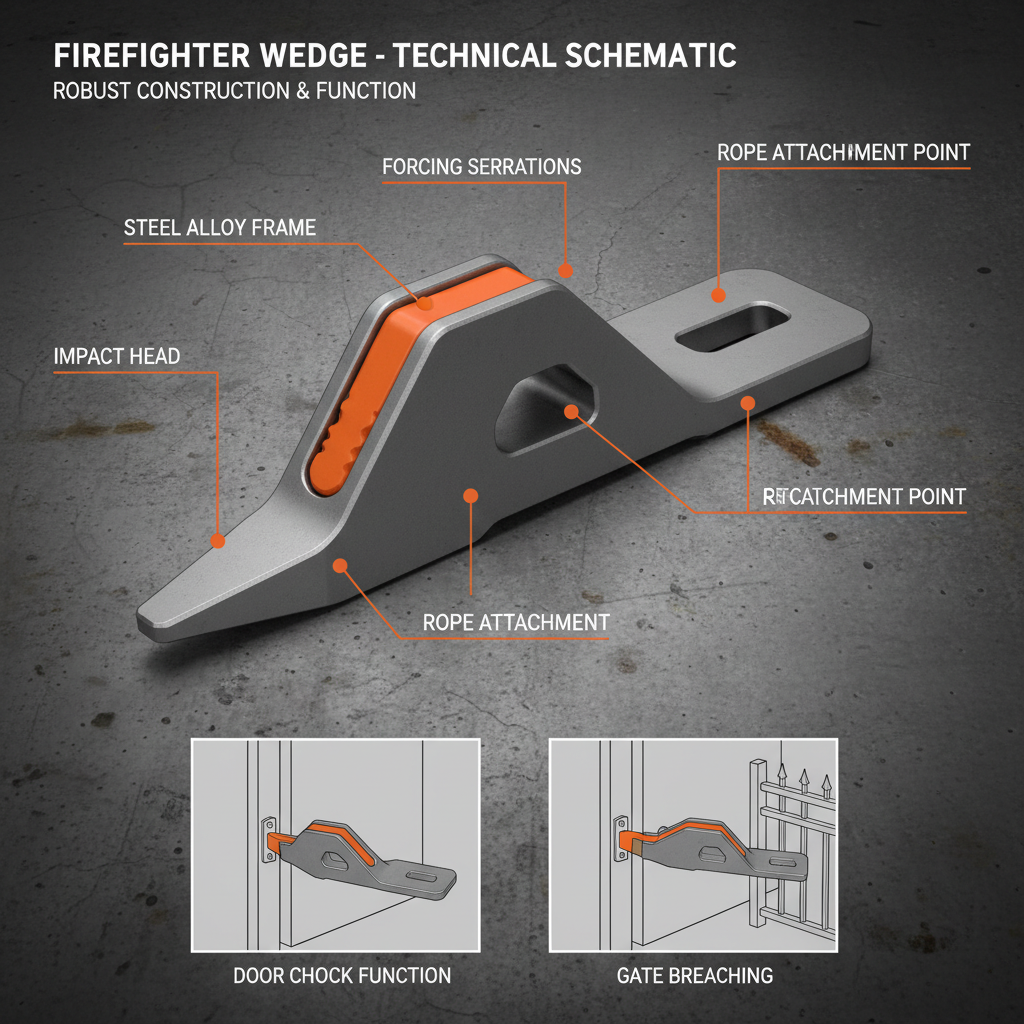
Why Every Squad Needs a High-Quality Firefighter Wedge
The primary purpose of a firefighter wedge is to provide a mechanical advantage. By driving a tapered piece of hardened steel or high-impact polymer into a door jamb, responders can force open locked doors without destroying the entire frame. Durability and precision are key; a wedge that bends or shatters under pressure is a liability. Modern wedges are engineered to withstand extreme thermal stress and immense physical force, ensuring they remain functional even in the harshest fire-ground conditions.
Pro Tip: Always carry a variety of wedge sizes. Different door frames and materials require different tapers to achieve the maximum forcing effect without slipping.
Comparing Types of Firefighter Wedges
Not all wedges are created equal. Depending on the mission, a firefighter might choose between steel, aluminum, or composite materials. While steel offers the highest strength for heavy-duty breaching, polymer wedges are often used for "door control," allowing firefighters to prop doors open slightly to manage airflow and prevent backdrafts. Choosing the right firefighter wedge depends on whether the goal is destructive entry or tactical ventilation.
Tactical Applications of the Firefighter Wedge
The use of a firefighter wedge extends beyond simply opening doors. In "forcible entry" operations, the wedge is often used to create a gap between the door and the stop, providing a purchase point for a pry bar. Additionally, in search and rescue, wedges can be used to stabilize lightweight debris or hold open an exit path for victims. Tactical ventilation also relies on these tools to ensure that doors stay open at a precise angle to let smoke escape while limiting oxygen intake into the fire core.
Proper Maintenance for Your Firefighter Wedge
To ensure that your firefighter wedge performs when it matters most, regular maintenance is non-negotiable. Metal wedges should be inspected for burrs or mushrooming at the striking head, which can cause the tool to slip or create dangerous shards. Applying a thin layer of corrosion inhibitor prevents rust in humid environments. For polymer wedges, check for stress fractures or melting points caused by exposure to high-heat zones. A well-maintained tool is a safe tool.
Maintenance Checklist:
• Inspect for metal fatigue or deformation
• Remove rust and apply protective coating
• Check polymer integrity for cracks
• Ensure clean storage in tool compartments
Technical Specifications: Choosing the Right Fit
When procuring equipment, understanding the specifications is vital. The angle of the taper determines how easily the firefighter wedge can be driven in and how much force it can sustain before slipping. A steeper angle is better for quick gaps, while a shallower angle is better for heavy lifting. Below are the standard specifications for professional-grade breaching wedges:
Conclusion: Reliability in the Palm of Your Hand
The firefighter wedge is a simple tool with a profound impact on operational efficiency. From facilitating rapid entry to managing the hazardous flow of air in a burning building, its utility is unmatched. By selecting the right materials and maintaining them with rigor, fire departments can ensure that their teams have the reliability they need during critical missions. Invest in professional gear to ensure that when the alarm sounds, your tools are ready for the challenge.
Frequently Asked Questions (FAQs)
What is the main difference between a forcing wedge and a door prop wedge?
A forcing wedge is typically made of hardened steel or aluminum and is designed to be hammered into a frame to break locks or create gaps for prying tools. It is built for high impact and structural deformation. In contrast, a door prop wedge (often polymer) is designed to hold a door in a fixed position. While forcing wedges are about destructive entry, prop wedges are about tactical control and airflow management. Both are essential but serve entirely different purposes on the fire ground.
Can a polymer firefighter wedge be used for heavy breaching?
Generally, no. Polymer wedges lack the structural rigidity and hardness required to deform steel door frames or break heavy-duty locks. Using a polymer wedge for heavy breaching can lead to the tool shattering, which poses a safety risk to the firefighter. For heavy-duty tasks, a hardened steel firefighter wedge is required. Polymer versions should be reserved for propping doors or creating very minor gaps in soft materials like wood.
How do I prevent my steel wedges from rusting?
Rust can compromise the smooth surface of a wedge, making it harder to drive into a frame. To prevent corrosion, we recommend cleaning the tool after every use to remove debris and moisture. Applying a light coat of industrial-grade lubricant or a corrosion inhibitor is highly effective. Additionally, storing tools in a dry, ventilated compartment rather than leaving them exposed to the elements in an open truck bed will significantly extend the lifespan of your equipment.
Which wedge size is best for standard residential doors?
For most residential doors, a medium-sized wedge (approximately 6 to 8 inches) with a moderate taper is ideal. This provides enough length to create a significant gap while remaining compact enough to be driven in quickly. However, it is always best to carry a "kit" containing small, medium, and large sizes. This ensures that whether you are dealing with a thin interior door or a heavy reinforced exterior door, you have the correct tool to achieve entry without wasting valuable time.
This is the first article






 English
  Arabic
  Bengali
  China
China  French
  German
  Hausa
Hausa  Indonesian
  Italian
  Japanese
  Javanese
  Malay
Malay  Persian
  Portuguese
  Punjabi
  Russian
  Spanish
  Swahili
  Telugu
  Vietnamese