








Fire-proof suit/Firefighter protective suit: field notes from a hot, noisy industry
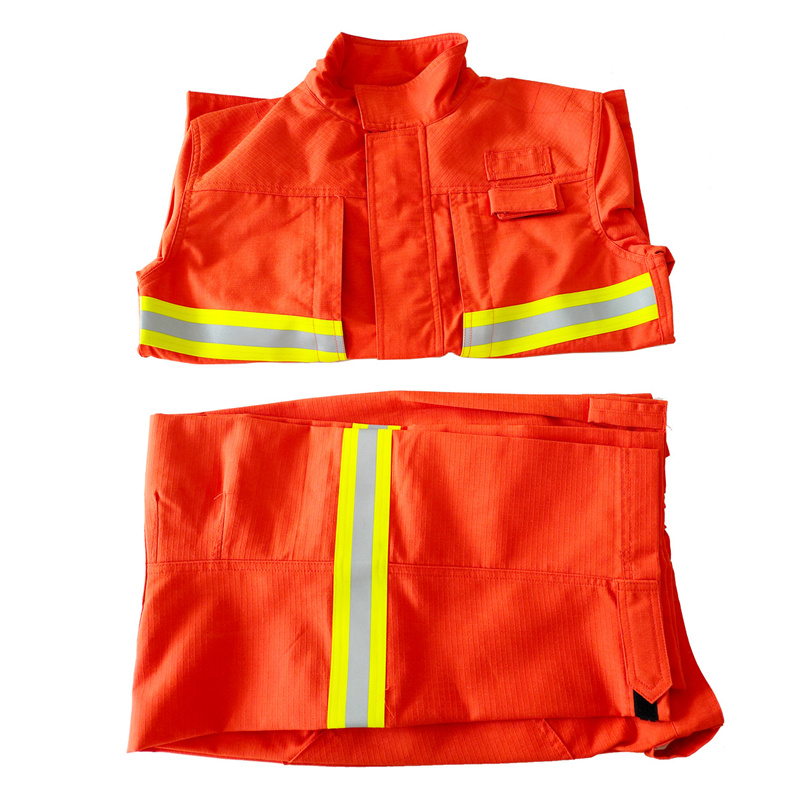
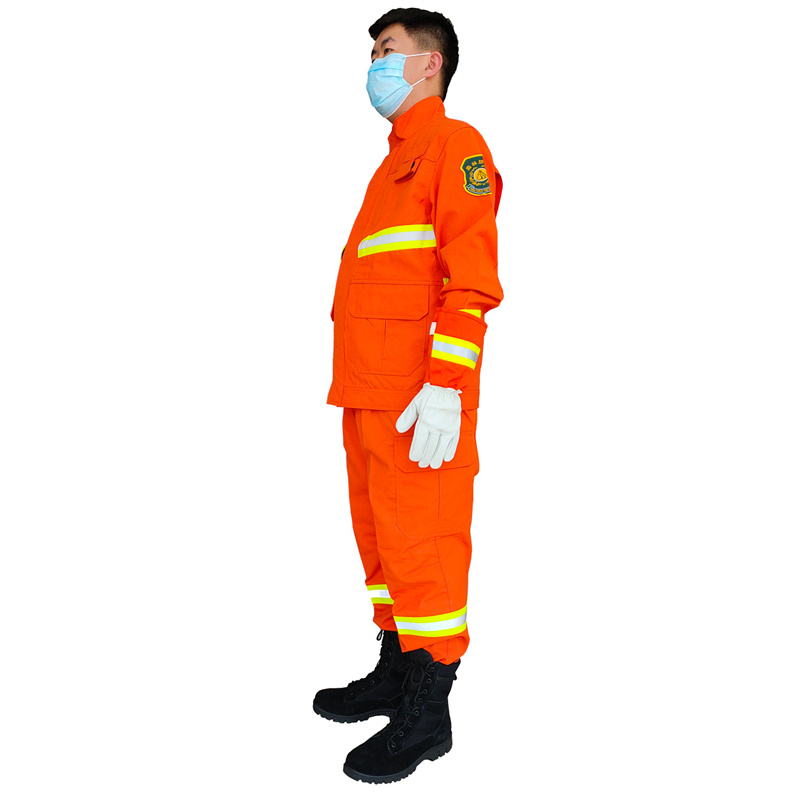
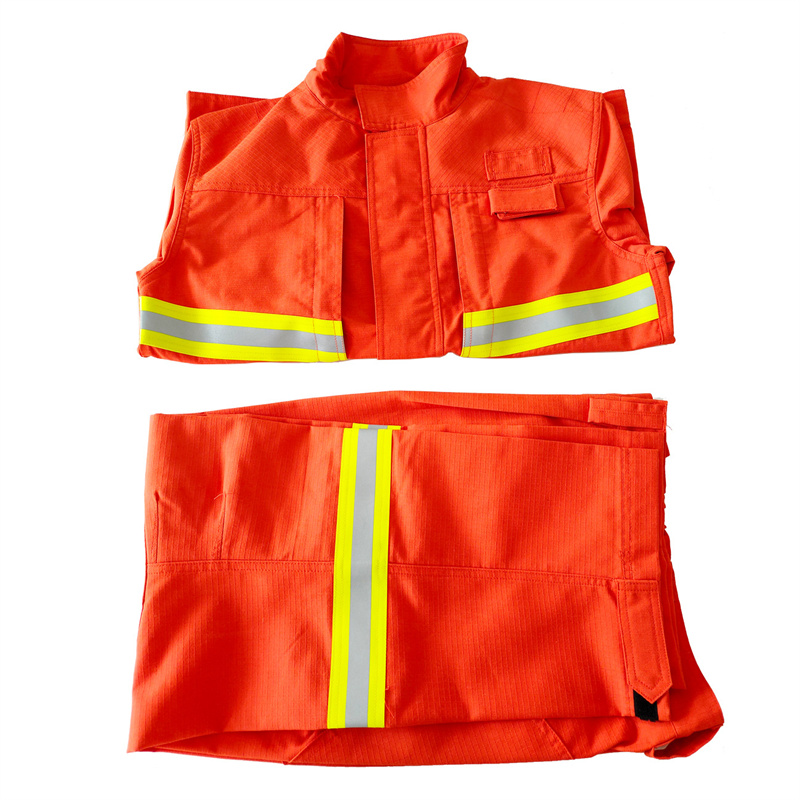
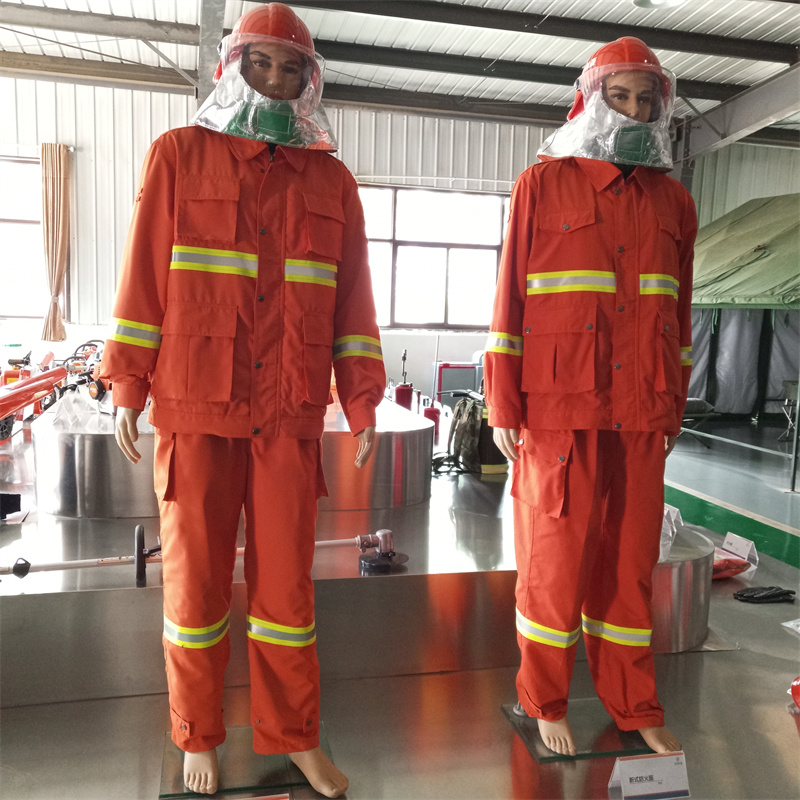
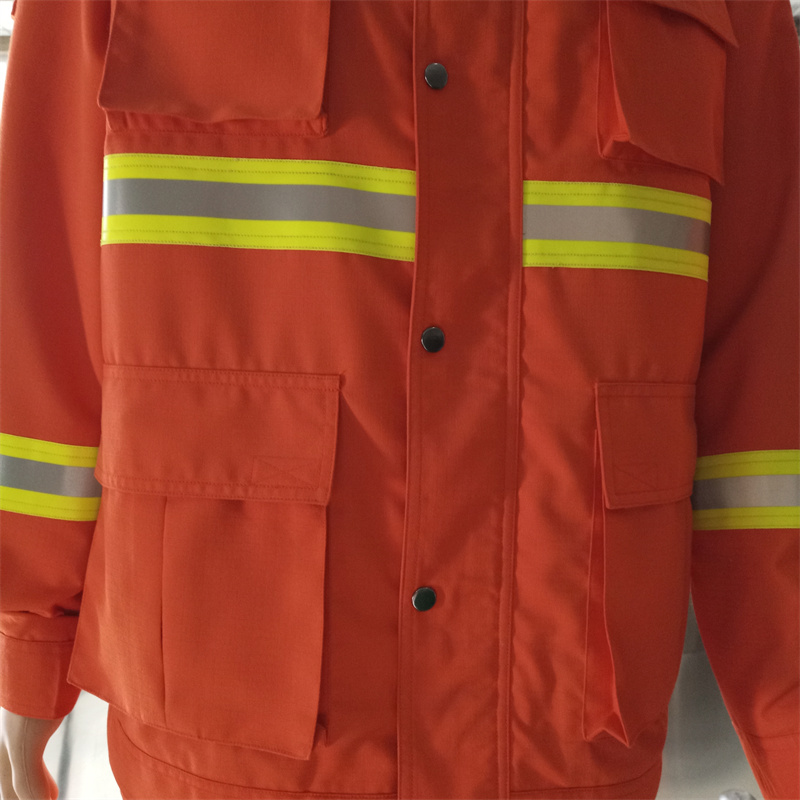
If you’ve ever stood next to an attack line at 3 a.m., you learn fast which gear works and which gear just looks the part. This set, made in No.118 Youyi Street, Xinhua Dist., Shijiazhuang City, Hebei Province, China, leans practical: a turnover collar, jacket with four stereo pockets, folded action pleats at the back for reach, elastic waist sides on the trousers, two metal-buttoned lower-waist pockets, and double-layer buttocks stitching. It sounds mundane, yet these details matter when crews crawl or climb.
What’s inside the gear (materials and process flow)
Under the hood, most modern ensembles blend aramid fibers and smart barriers. In this line, the bill of materials typically includes:
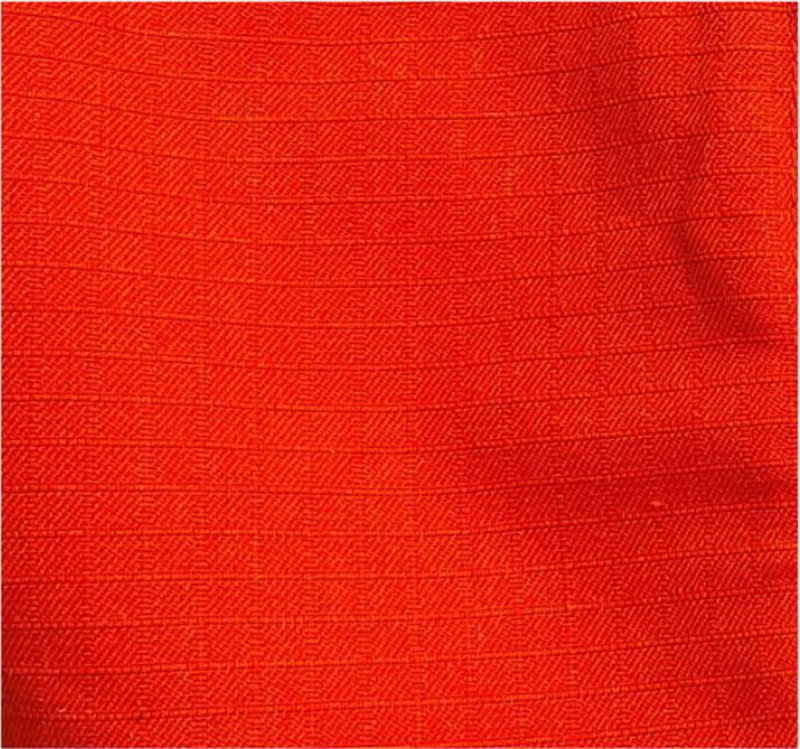
- Outer shell: aramid blend (e.g., PBI/Kevlar or meta/para-aramid), ≈180–220 g/m², ripstop options.
- Moisture barrier: PTFE or PU-coated membrane laminated to FR substrate, seams taped.
- Thermal barrier: quilted aramid felt with face cloth for comfort, ≈120–160 g/m².
Process flow (short version): fabric inspection → cutting and marking → multi-needle stitching (high-heat aramid thread) → tape-sealing of barrier seams → hardware install (metal buttons, zips) → dimensional fit check → heat/flash test sampling → labeling and serialization. To be honest, the seam taping and post-laundry reinspection often separate the good from the merely okay.
Specs snapshot (indicative)
| Item | Spec (≈ / typical) |
|---|---|
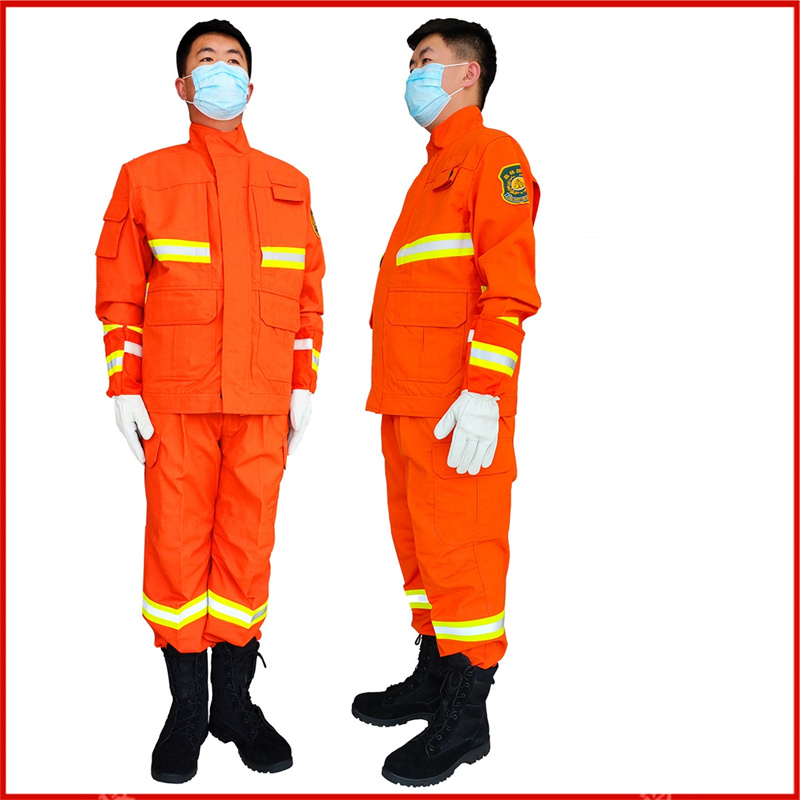
| Jacket | Turnover collar; 4 stereo pockets; action-pleat back; reflective trim options |
| Trousers | Elastic sides; double-layer seat; 2 metal-button pockets |
| Thermal Protective Performance (TPP) | ≥35 cal/cm² target (NFPA-style), real-world use may vary |
| Total Heat Loss (THL) | ≈205–260 W/m² (design-dependent) |
| Sizes | S–4XL; custom grading available |
| Service life | ≈5–7 years with proper care, inspections, and decon |
Standards, tests, and what they mean
Depending on configuration, ensembles can be engineered to comply with NFPA 1971 (structural), EN 469 (Level 2), and ISO 11612 for heat and flame. Common test references include ISO 17492 (heat transfer/TPP analogy), ISO 15025 (A1/A2 flame spread), and radiant heat per ASTM F2700. Many customers say they watch TPP and THL like hawks; I do too.
Where it’s used
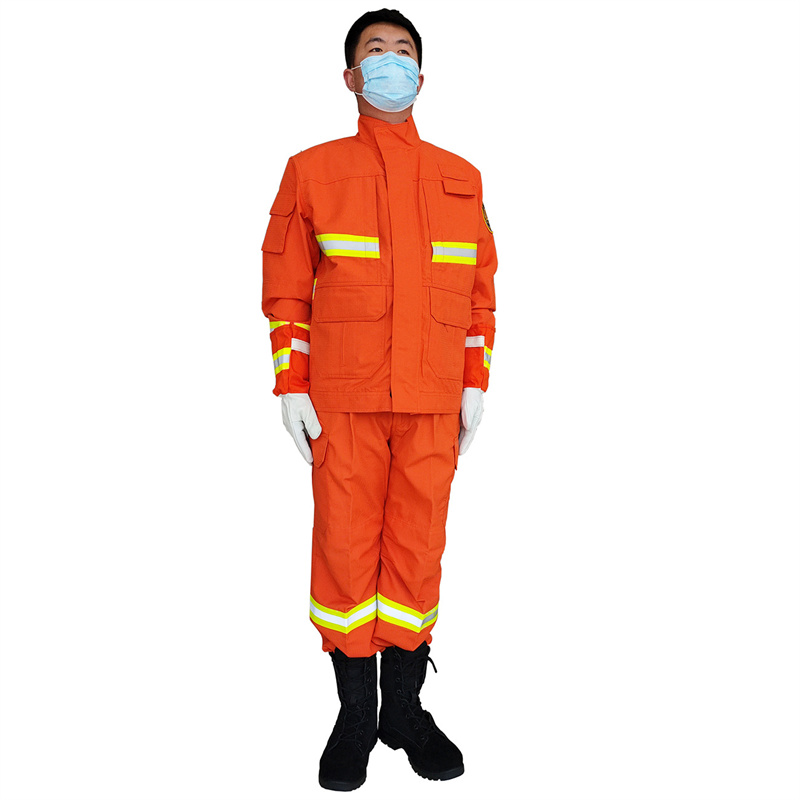
Municipal suppression, industrial brigades (petrochemical, steel, power gen), training academies, and—configured appropriately—airport and proximity tasks. For petrochem, I’d prioritize radiant performance and reinforcement; for municipal, balance THL for heat stress.
Vendor landscape (quick take)
| Vendor | Shell options | Standards | Lead time | Notes |
|---|---|---|---|---|
| FFW Fire Safety | Aramid blends, custom colors | EN 469 / ISO 11612 (configurable) | ≈4–8 weeks | Flexible MOQs; value-focused |
| LION, Honeywell, VIKING, etc. | Broad PBI/aramid portfolios | NFPA 1971 / EN 469 (model-specific) | ≈6–12 weeks | Extensive dealer networks |
Comparison is shorthand; verify lab certificates and batch reports, always.
Customization and feedback
- Pocket mapping, knee/elbow reinforcements, reflective tape layouts, department patches.
- Heat-stress options: lighter thermal liners, breathable facings, vented gussets.
- Users report the elastic waist is “surprisingly forgiving” under harnesses; the double-seat panel holds up in drills.
Mini case notes
Fire-proof suit/Firefighter protective suit sets deployed for an industrial brigade in North China saw ≈18% fewer repair tickets after switching to reinforced knees and taped-moisture barriers. Another municipal trial (12 sets) favored a higher THL liner during summer ops; crews felt less “steam-baked,” their words, not mine.
Care, service life, and testing cadence
Routine: post-incident gross decon, advanced cleaning per ISO 6330, inspect seams/tape, retire on failure or end-of-life. Quarterly hood-to-hem checks; annual third-party testing is ideal. Service life? Around 5–7 years, but heat load and wash cycles can shorten that. I guess that’s the price of hard use.
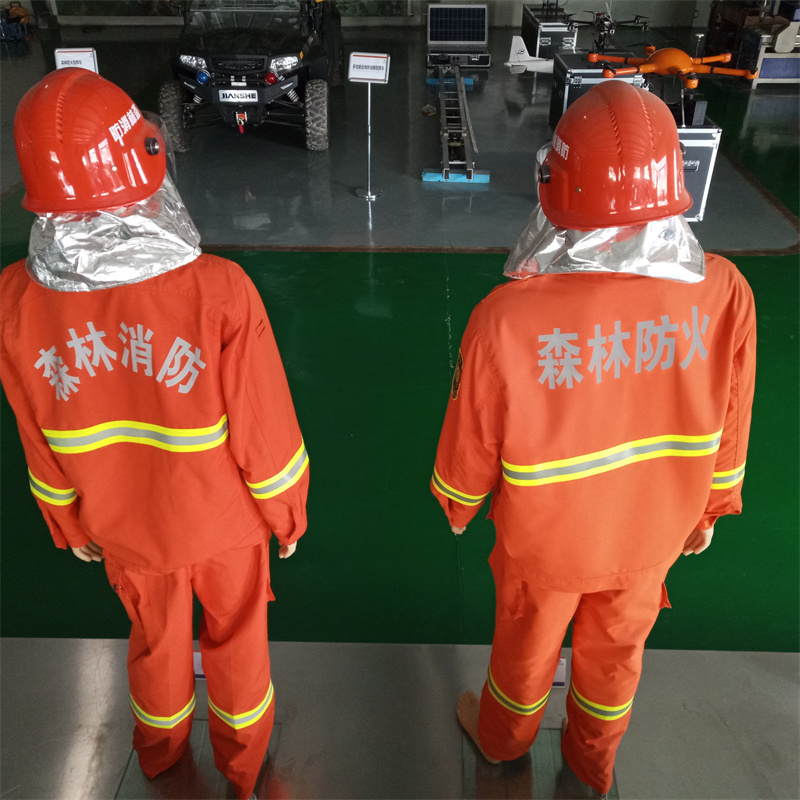
Bottom line: a Fire-proof suit/Firefighter protective suit is a system, not just a jacket and pants. Get the balance right—shell durability, barrier integrity, and breathable insulation—and your crews will notice, usually by not noticing the gear at all.



 English
  Arabic
  Bengali
  China
China  French
  German
  Hausa
Hausa  Indonesian
  Italian
  Japanese
  Javanese
  Malay
Malay  Persian
  Portuguese
  Punjabi
  Russian
  Spanish
  Swahili
  Telugu
  Vietnamese